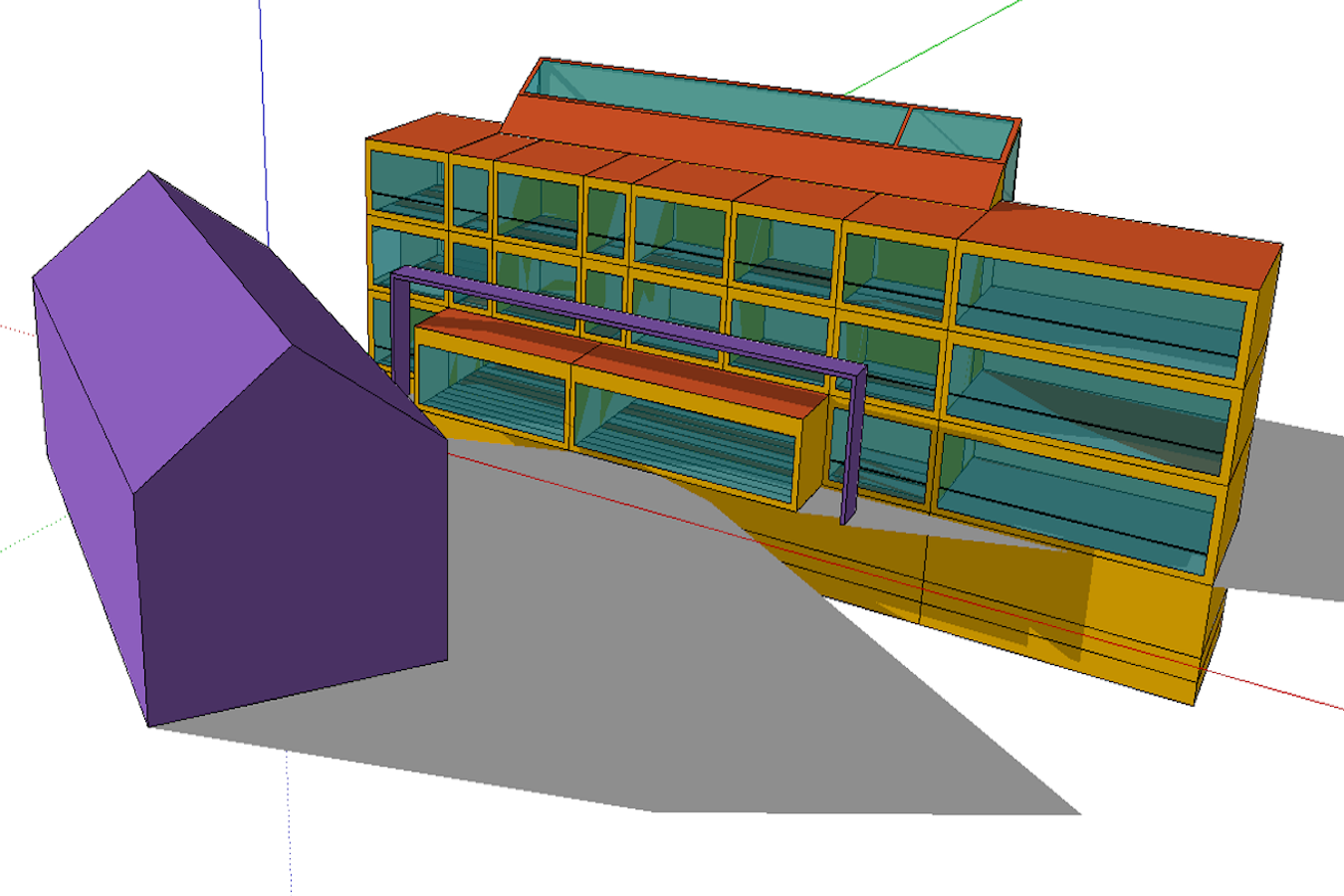
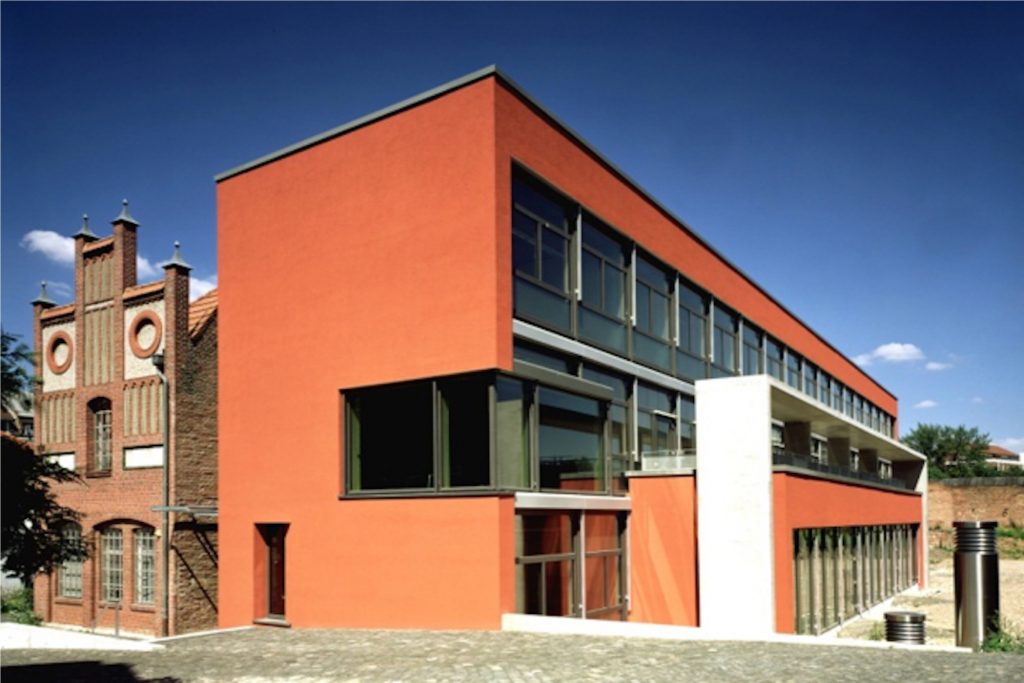
The ZUB office building (Centre for Environmentally Conscious Building) was designed in 2001 with the purpose of testing low-energy and carbon technologies. With the building having primarily heating demands, the design annual heating demand was estimated to be less than 20 kWh/m2. Energy demand in operation was 16.5 kWh/m2, achieving the best possible rating according to the German Energy code “Wärmeschutzverordnung 95”.
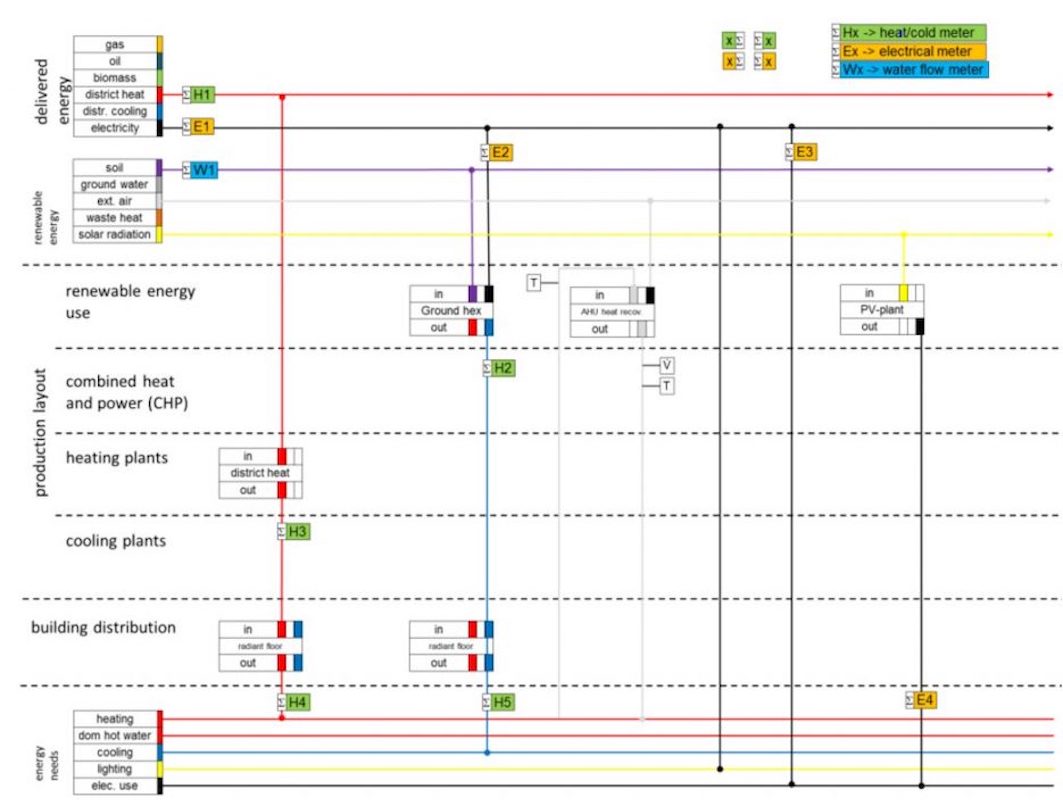
The energy concept of the building included construction with very low U-value, triple glazed windows and design to use natural lighting and natural ventilation. Solar gains meet most heating demands through the south-facing façade. When additional heating is required, this is delivered through a communal district heating network. Cooling demands are met by a ground-source heat pump placed under the ZUB basement. As the building is air-tight, an 80% mechanical ventilation with heat recovery system is used.
The characteristic that defines the building is the high inertial behaviour due to the weight of the building walls and the massive radiant systems installed to deliver heating and cooling. These types of high thermal mass slabs allow water supply temperatures close to the internal ambient temperatures, i.e. use of low water temperatures during the heating season and relatively high water temperatures during the cooling period. Combining these strategies leads to reduced energy consumption by maximising the exergetic use of the climate control systems.