
Demand-side response solution using model predictive control (MPC) and flexibility functions in summer houses with swimming pool.
Project Information
Location
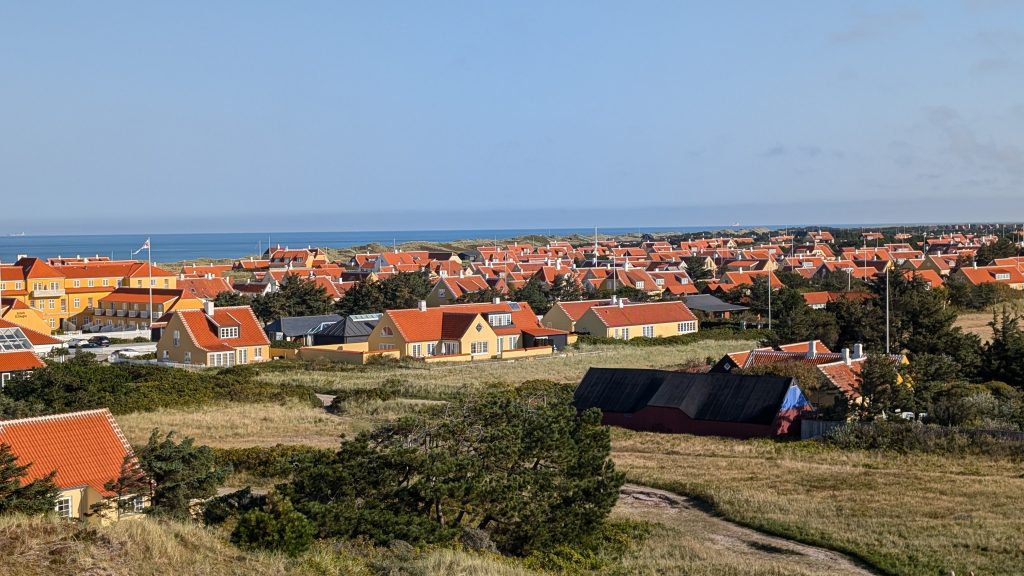
Blåvand, Denmark
Building Typology
Recreational Residential Building
Technology Installed / Proposed
The smart-energy operating-system (SE-OS) is used to develop, implement and test solutions for operating flexible electrical energy systems at all scales and provide ancillary services. Integration of information and communication technology (ICT) is attained to exchange data between transmission system operators (TSO), distribution system operators (DSO), aggregator and the summer houses. On-line services for price and load forecasting is used in combination with model predictive control (MPC).
DATA AVAILABILITY
–
Status
Operational - Results Available
PROJECT AIM
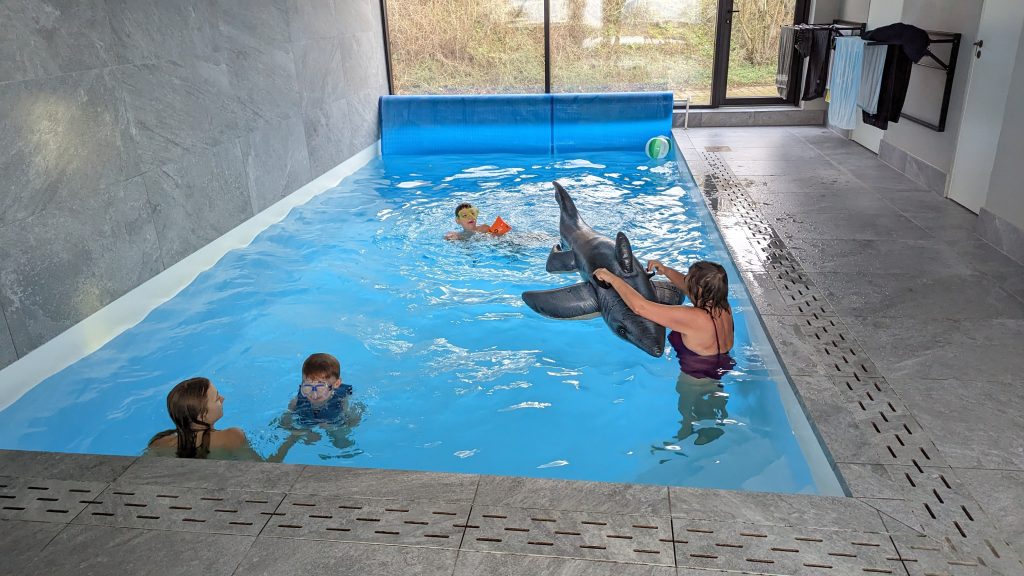
The objective of the project was to demonstrate the potential of exploiting demand-side flexibility of indoor swimming pools by using information and real-time data available as well as electricity market prices, meteorological data and price signals to minimise operational costs. Novel model predictive control algorithms were developed to use price signals from aggregators to evaluate distributed energy resources flexibility and activate impulsion pumps for hot water production in indoor swimming pools in rental houses. The concept is using controllers based on the flexibility function method.
BUSINESS PROPOSITION / MODEL
Besides technological developments, policy and regulation play a significant role in the success of projects like the one presented here. Tax break or lower electricity tariffs would be useful to encourage consumers to participate in such projects. Incentives are necessary to encourage uptake of solutions exploiting flexibility, since savings are often not significant enough to encourage smaller consumers to participate in similar schemes. For larger consumers instead, incentives complement the savings made from deploying the flexibility set up.
VALUE PROPOSITION
The project demonstrated that energy flexibility could be harvested from the existing resources by combining existing tools and technologies with the new algorithms developed. Indeed, the CO₂ emissions for electricity production were reduced by approx. 20% by deploying the methodologies and setup developed in the project. Similarly, the annual utility bill for the summer houses was reduced by approx. 15%, but with the volatile electricity prices in 2022, the saving was around 30%.
IMPACTS
We consider that the new solution is robust and scalable. House owners and summer house rental companies are asking for a business-ready solution, and we are considering establishing the services for a broader spectrum of house owners. One possible solution would be an annual contract with Center Denmark for the services.
LESSONS LEARNED
Data collection, sensing and monitoring:
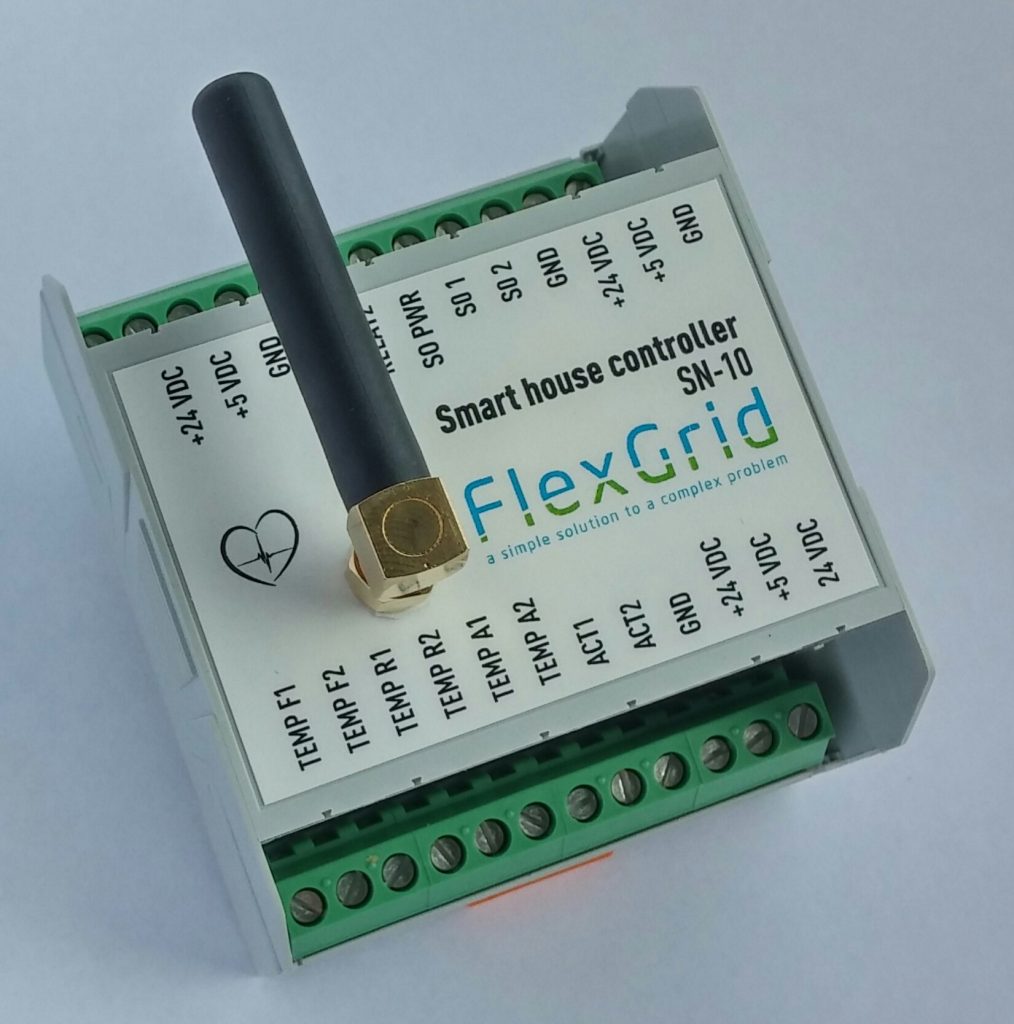
For the initial installation we had serious issues with robustness as well as problems getting the real time signals to Center Denmark.
IMPLEMENTATION
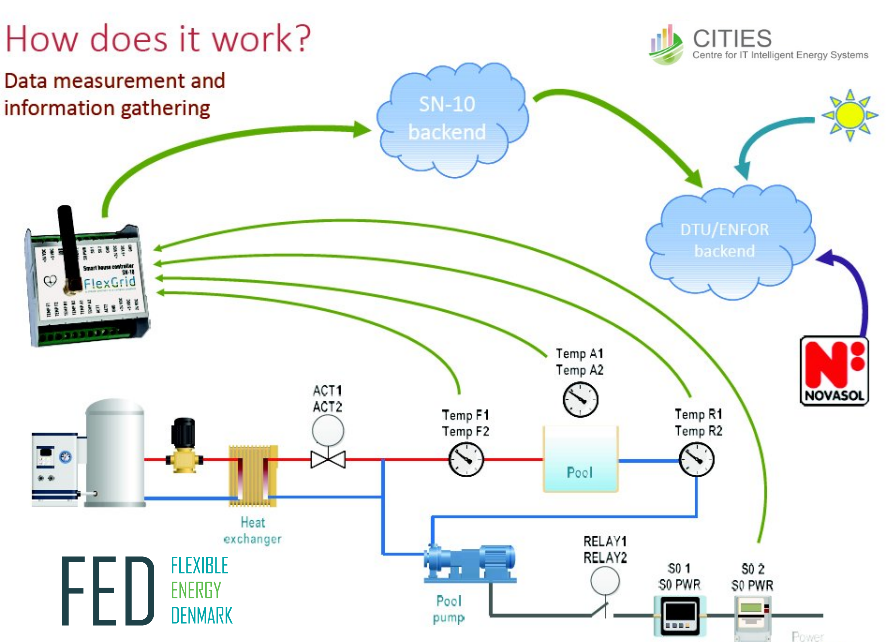
The energy required to heat up the swimming pools is optimised by controlling the water temperature set points to react to different price levels. An aggregator is used to evaluate how much flexibility the swimming pool can provide for different price levels (i.e. flexibility function of the swimming pools) and broadcast the appropriate price signals to achieve a given flexibility level. Subsequently, the aggregator uses the price-flexibility function so obtained to bid into the markets for ancillary services.
Control theory is applied to the study of power markets for competitive bidding and stability analysis. The controlling approach is based on a) a local controller (LC) and b) a model predictive controller, which generates the optimal temperature set points (to be sent to the LC) by minimising the costs or CO₂ emission related to power consumption of the heating system.
The system requires real-time data such as meteorological, electricity market and consumers’ demand behaviour (e.g., booking status of the summer houses) and uses machine learning, artificial intelligence and new market approaches to facilitate the provision of flexibility at large scale.
ADDITIONAL INFORMATION
For more information on the Case Study
Contact Person:
Prof. Henrik Madsen
Copyright Statement
Fraunhofer IEE agree that the case study information of ZUB Building can be shared under CC BY-NC-ND 4.0 license. This license allows others to download your works and share them with others as long as they credit you, but they can’t change them in any way or use them commercially.