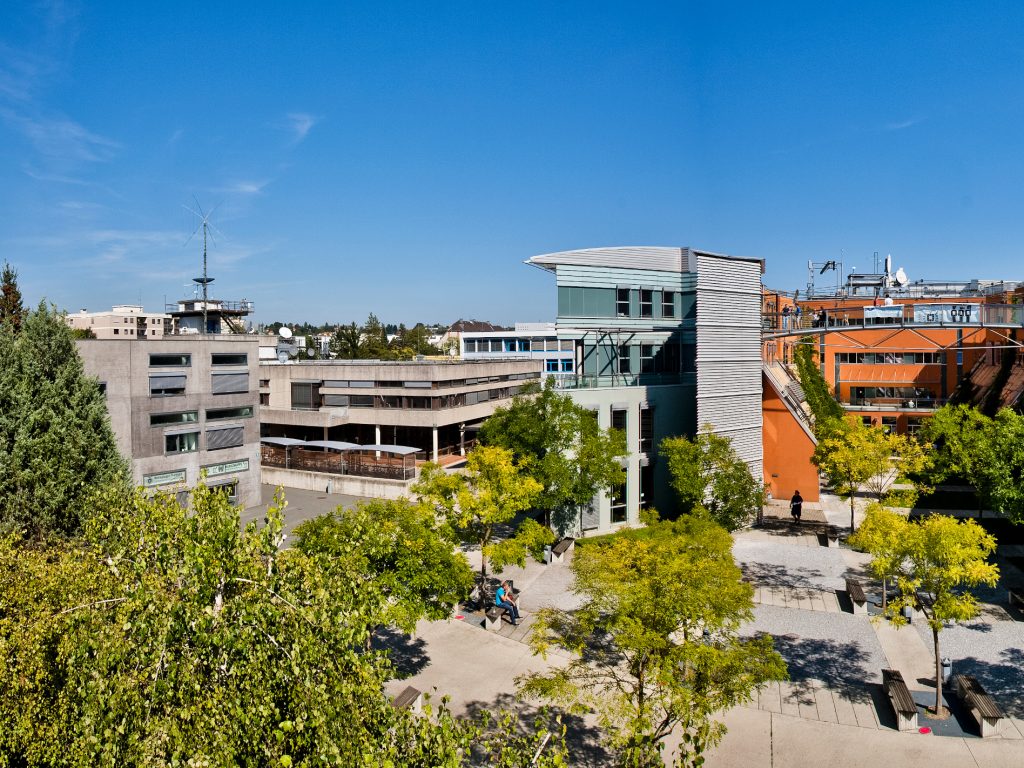
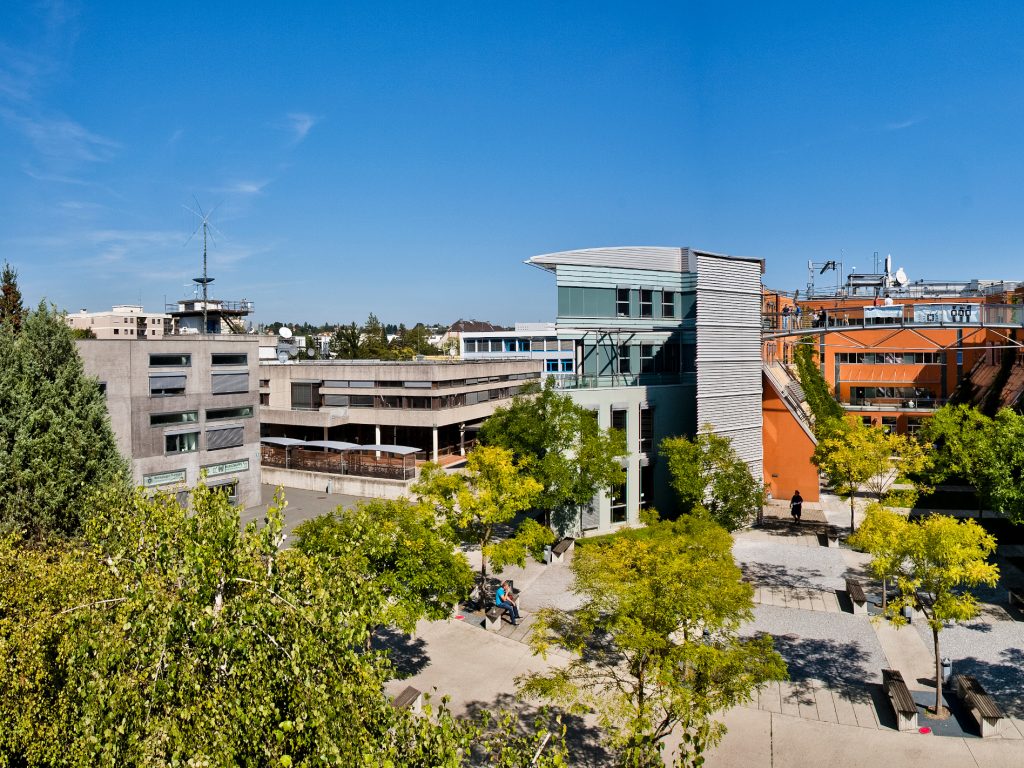
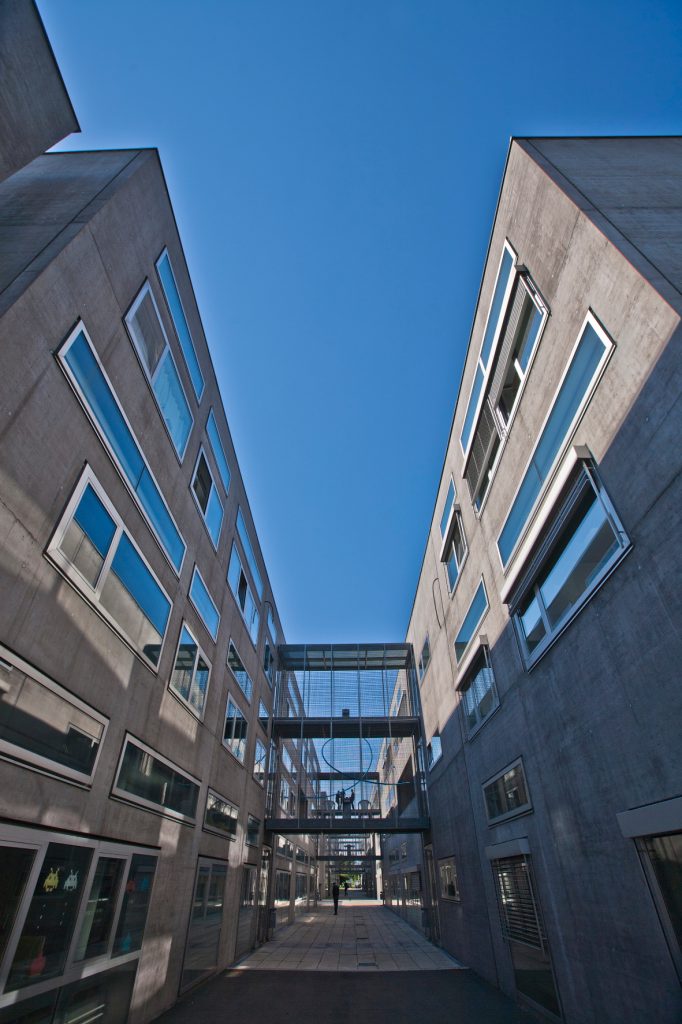
Several buildings on the Technische Universität Graz (TU Graz) campus were used as case study within the Austrian national project “Cool-Quarter-Plus” to develop and test machine learning methods to predict energy consumption and occupancy, based on indoor air quality measurements and external weather data to inform intelligent cooling control strategies.
Project Information
Location
Graz, Austria
Building Typology
Education Buildings (including office and higher-education teaching spaces)
Technology Installed / Proposed
Machine Learning (ML) methods are used to predict energy consumption and occupancy.
DATA AVAILABILITY
Information about the building; hourly energy consumption; occupancy for 3 offices (CO₂, number of occupants, temperature, relative humidity); weather data (temperature, solar radiation, …). Data are continuously updated.
Status
Operational - Results Available
PROJECT AIM
The project aims at coordinating cooling concepts at district level. It focuses on an office and research campus. Several methods for predicting energy consumption were developed and compared as part of the project, including random forest-based prediction models and neural network time series models. One major line of work is occupancy prediction based on CO₂, temperature, relative humidity, etc. A paper on this subject is currently under developement.
BUSINESS PROPOSITION / MODEL
Business model proposition was not part of this project.
VALUE PROPOSITION
Too early to tell.
IMPACTS
The project was expected to identify which methods are best suited for prediction. Model performance was evaluated using regression error metrics such as the root mean square error (RMSE) and the coefficient of variation of the root mean square error (CV-RMSE), which are used specifically in the context of building energy applications and suggested by the ASHRAE Guidelines (see Schranz et al., 2021). Another goal was to investigate data requirements for different methodologies and integration with internet of things (IoT) platforms.
LESSONS LEARNED
Data collection, sensing and monitoring:
- There are still problems with the LoRa technology, as sensor quality is often a concern and there are still not many different manufacturers.
- Infrared people counting may provide inaccurate measurements. Such technology requires a lot of battery power and is hence not recommended, especially for larger scale buildings.
- Retrofitting of cooling technologies is difficult as measurement of cooling energy is not standard and there is usually need for additional sensors (which are expensive and difficult to install).
Users behaviour:
Users do not necessarily operate the HVAC system as intended (e.g., they may favour opening windows instead of using air conditioning). Conversations to explain benefits might be necessary.
IMPLEMENTATION
The buildings comprise office spaces and teaching areas arranged over two floors, with cooling available on the second floor. Installation of a new cooling system is currently ongoing; the new cooling device will be remotely controllable with sensors deployed to directly measure the cooling energy demand of a single air condition unit.
The monitoring equipment consists of CO2, humidity, temperature sensors, window and door open/close status, people count based on infrared light barrier. The data collection is managed by an Inframonitor, self-developed IoT energy data platform (will be open sourced) based on InfluxDB. The platform receives sensor updates via MQTT protocol; a LORA infrastructure is available for indoor air quality measurements.
ADDITIONAL INFORMATION
T. Schranz, J. Exenberger, C. Møldrup Legaard, J. Drgona, G. Schweiger. (2021). Energy prediction under changed demand conditions: robust machine learning models and input feature combinations. Proceedings of Building Simulation 2021: 17th Conference of IBPSA.
https://doi.org/10.26868/25222708.2021.30806
For more information on the Case Study
Contact Person:
Dr Gerald Schweiger
Copyright Statement
Fraunhofer IEE agree that the case study information of ZUB Building can be shared under CC BY-NC-ND 4.0 license. This license allows others to download your works and share them with others as long as they credit you, but they can’t change them in any way or use them commercially.