
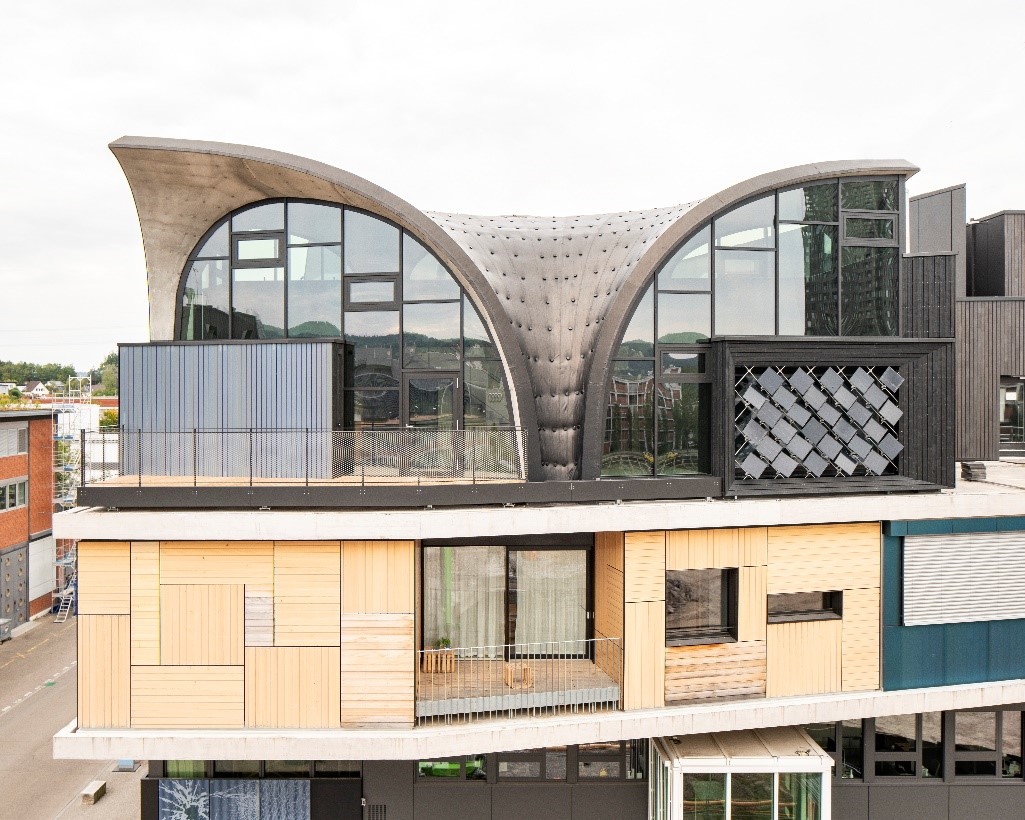
HiLo (High performance, Low emissions) is a unit in NEST (Next Evolution in Sustainable Building Technologies), a research and innovation building located in Dübendorf (Switzerland) operated by the Swiss Federal Laboratories for Materials Science and Technology (Empa). It is the result of an integrated design process led by the Architecture and Building Systems (A/S) and Block Research Group (BRG) at Eidgenössische Technische Hochschule Zürich (ETH Zürich) and became fully operational in the spring of 2022.
Project Information
Location
Zürich, Switzerland
Building Typology
Office Building
Technology Installed / Proposed
The HiLo unit integrates a combination of passive strategies; advanced control systems; efficient decentralised systems for heating, cooling and ventilation; as well as on-site electricity generation. The unit is equipped with a comprehensive sensor network that collects data every minute (changeable if needed) and monitors both indoor and outdoor climates, along with the energy consumption and generation. The collected data is stored in a specially developed platform tailored for research purposes. While not fully available to the public, this data provides a valuable resource for ongoing research.
DATA AVAILABILITY
–
Status
Operational - Results Available
PROJECT AIM
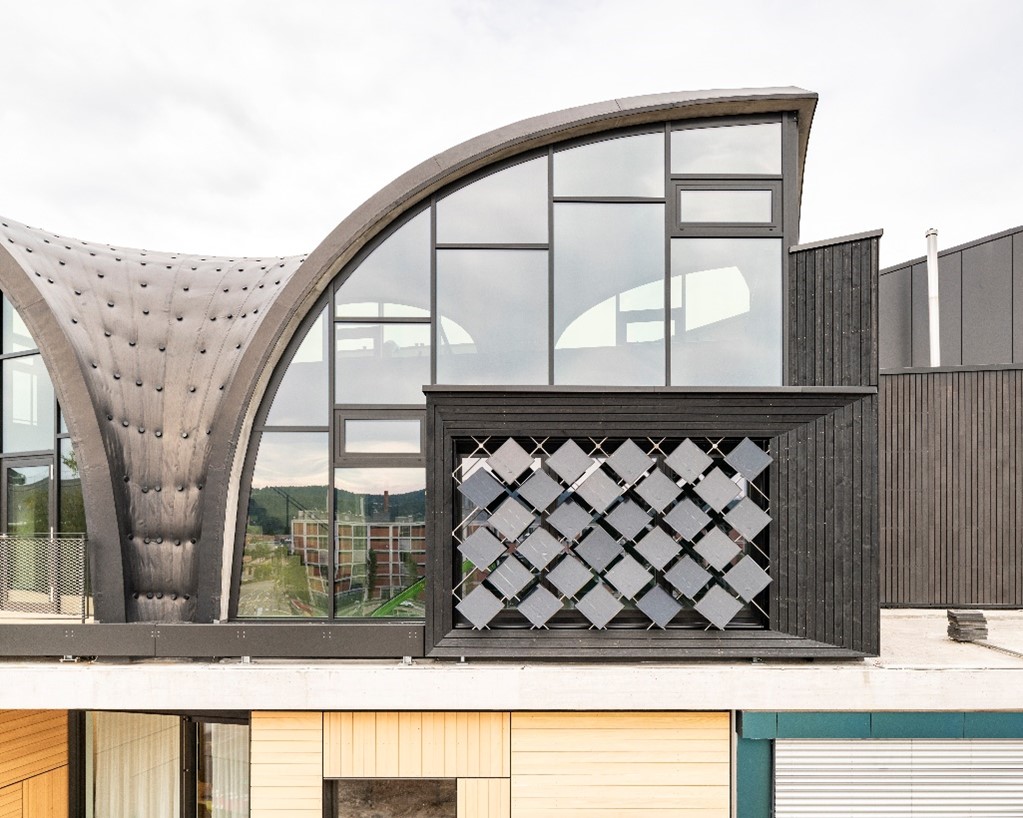
HiLo serves as a showcase for the application of lightweight structural components, including a thin-shell roof and a funicular floor system, both of which were developed by BRG. To fully showcase the structural achievement of the double-curved thin shell roof, the two-storey HiLo unit predominantly adopted an open-plan office with only two enclosed offices.
A core strategy of HiLo’s energy concept is the maximisation of the structural components’ potential, while also considering their impact on the overall building life cycle in terms of embodied energy. Achieving this goal involved a combination of passive strategies; advanced control systems; use of efficient decentralised systems for heating, cooling and ventilation; as well as on-site electricity generation. Key energy systems in HiLo are:
- An adaptive solar façade developed by the A/S Group consisting of 30 photovoltaic modules that manage solar irradiation for reduced heating/ cooling loads and on-site electricity generation.
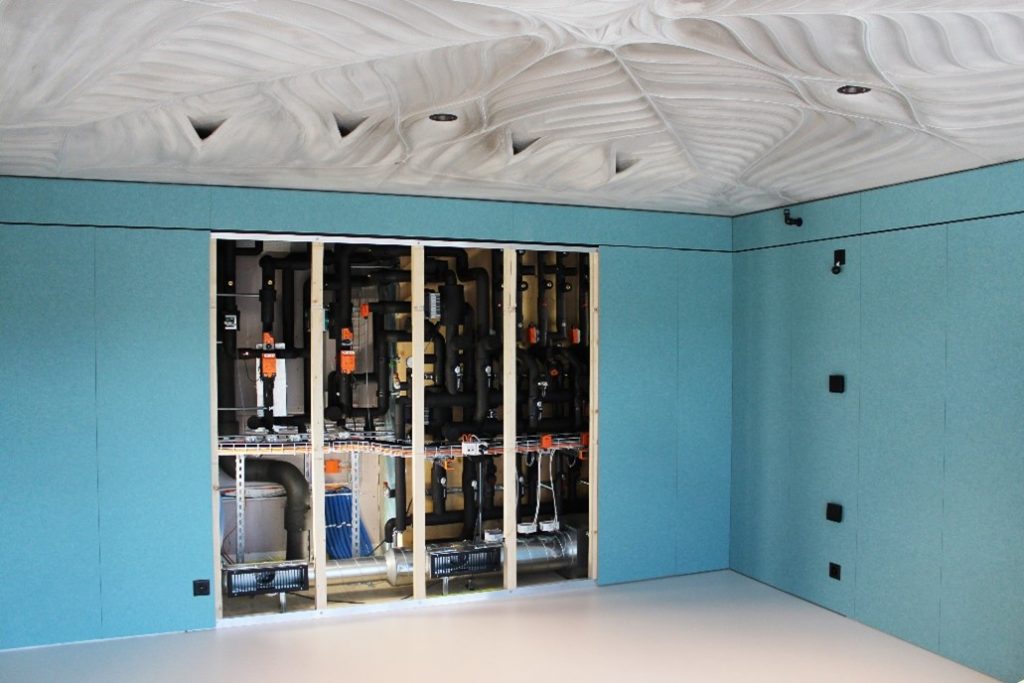
- Thermally activated building systems integrated into the lightweight funicular floors.
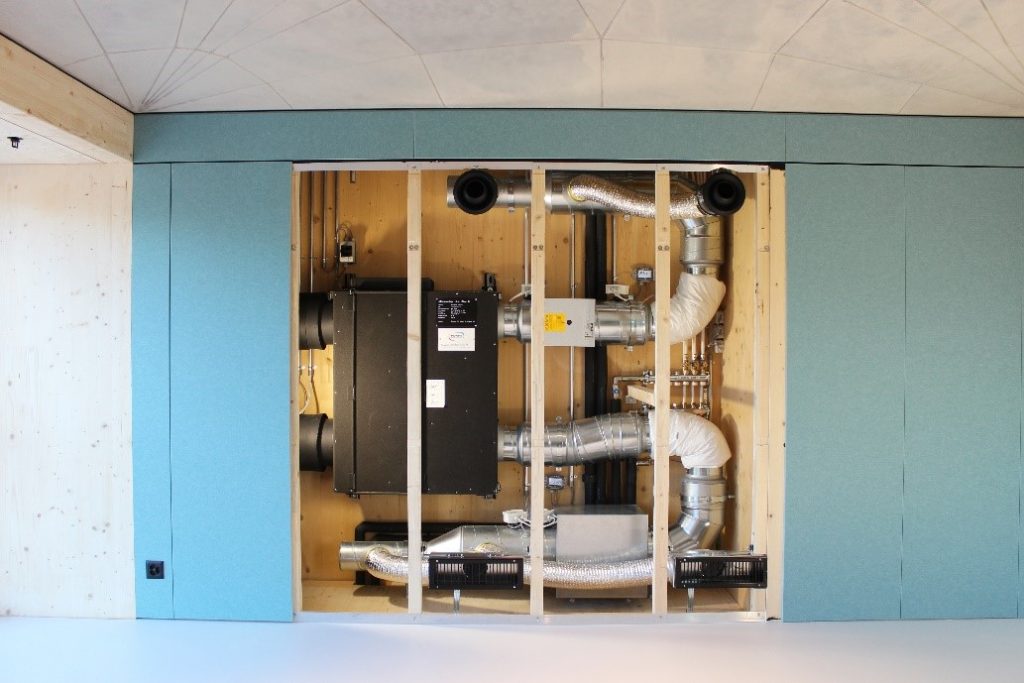
- Hybrid variable refrigerant flow heating and cooling system and mechanical ventilation with heat recovery system developed by Mitsubishi Electric. Both systems are connected to cloud-based remote monitoring and control system.
HiLo, among other units, is a node in a district energy hub (Empa ehub) using multiple thermal and electrical grids. These grids operate bidirectionally, allowing surplus energy to be transferred between HiLo, the ehub and other units.
BUSINESS PROPOSITION / MODEL
The current implementation of the learning-based controller at HiLo is in collaboration with a partner from the HVAC industry (Mitsubishi Electric), which is examining the potential for a business proposition (i.e. applying the controller for commercial use). Furthermore, a startup called Solskin has been established focusing on adaptive solar façade.
VALUE PROPOSITION
The DRL-based controller was successfully implemented during the summer of 2023, regulating the thermally activated building system in one of the two enclosed offices in HiLo. This implementation was facilitated by the existing research override, established by Empa, allowing for modifications to the standard operating modes of the building’s energy systems.
IMPACTS
After the simulation, the implementation of the deep-reinforcement-learning-based controller is expected to yield significant energy savings and fewer comfort violations as compared to a rule-based controller. Looking ahead, the controller developed and tested in one enclosed office will be transferred to another office in HiLo with similar layout but minor differences in the building energy systems. Transfer learning approaches and techniques will be used for this task. This method makes the controller more scalable, reducing the initial learning phase by allowing the controller to retain the knowledge acquired from the previous control task and fine-tune its control policy online.
LESSONS LEARNED
Users’ acceptance/ Users’ comfort:
While formal feedback was not collected from the occupants, informal interactions with them indicated generally positive feedback. Chats between researchers and the occupants suggested that the DRL-based controller created a more comfortable indoor environment compared to the standard operating modes.
IMPLEMENTATION
HiLo’s building systems for indoor climate typically operate based on demand control. However, the adaptability of the infrastructure allows for the seamless implementation and testing of novel control strategies to optimise system operations. Presently, HiLo is used as the application case study for the development and testing of a Deep Reinforcement Learning based controller.
ADDITIONAL INFORMATION
For additional information, please visit the HiLo website, which also provides links to publications related to HiLo: https://www.empa.ch/web/nest/hilo.
For more information on the Case Study
Contact Person:
Prof. Arno Schlueter
Copyright Statement
Fraunhofer IEE agree that the case study information of ZUB Building can be shared under CC BY-NC-ND 4.0 license. This license allows others to download your works and share them with others as long as they credit you, but they can’t change them in any way or use them commercially.