
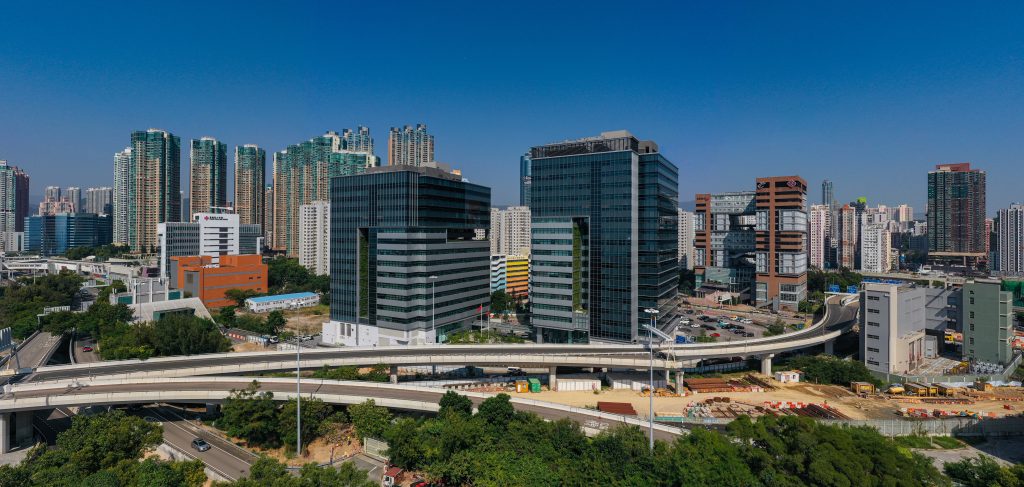
The government office complex (GOC) located in Kowloon, Hong Kong consists of two office towers (16 and 18 stories respectively), totalling over 98,000 m2 of space for government bureaus and departments. The complex has a central chiller plant located in the basement that supplies chilled water to the towers’ air conditioning systems through a network of pipes. The chiller plant contains three 3,517 kW water-cooled chillers (two operational, and one backup), along with one 3,517 kW heat recovery chiller for added cooling and heating capacity. The Electrical and Mechanical Services Department (EMSD) developed AI models for cooling-load prediction and overall chiller system’s coefficient of performance (COP) evaluation by means of historical data from the building management system (BMS) and real-time data collected from internet of things (IoT) sensors.
Project Information
Location
Kowloon, Hong Kong
Building Typology
Miscellaneous, including office buildings
Technology Installed / Proposed
An AI-enabled digital twin platform utilising multivariate regression, ensemble learning models and a semantic data model was implemented to optimise chiller performance and operations.
DATA AVAILABILITY
Data access will be considered on a case-by-case basis for collaborative research.
Status
Operational - Results Available
PROJECT AIM
EMSD manages over 8,000 facilities across the Hong Kong Special Administrative Region (HKSAR) Government portfolio. In response to the Climate Action Plan 2050 [1] established by Hong Kong SAR Government and a nationwide campaign to accomplish carbon neutrality before 2050, this project aimed at reducing electricity consumption in all Government office complexes by optimising energy efficiency.
A review of energy usage data of the Kowloon government office complex revealed inefficient HVAC system operations as a major electricity consumer. To address this issue, the EMSD’s project team collected and pre-processed building’s electrical and mechanical (E&M) datasets to analyse operational patterns and train an ensemble learning model to predict the cooling load demand, enabling the designed system to centrally optimise chiller functions. Specifically, the project team was tasked with:
- Optimising the energy efficiency of HVAC systems in Hong Kong’s Government facilities.
- Evaluating the portability and scalability of semantic models used in buildings.
To achieve this goal:
- An ensemble learning model was trained to predict cooling load demand of the building and adopted multivariate polynomial regression to estimate the COP of each chiller.
- The final model was adopted to generate an optimal operating sequence for the chillers that could provide the highest average seasonal COP over the next 7-day cooling load predictions.
- A semantic approach was harnessed to visualise the relationship among components in the chiller plant.
BUSINESS PROPOSITION / MODEL
By implementing AI-optimised chiller sequences, chiller system performance in the government office complex was improved significantly with an average COP increase by more than 10%. This would in turn directly translate to lower energy costs and cooling expenses for the government.
VALUE PROPOSITION
The AI-based approach delivered significant operational performance improvements and benefits versus traditional HVAC control methods. The semantic AI models were straightforward to implement and use, providing accurate cooling load and chiller COP predictions. This enabled automated optimisation of chiller sequencing, improving overall COP by over 10% during on-site testing, resulting in major energy efficiency gains. Moreover, the interoperable semantic modelling facilitates rapid re-deployment of the proven AI optimisation across multiple government buildings with diverse equipment types, maximising value extraction compared to one-off customised solutions.
IMPACTS
The AI-optimised chiller sequencing delivered substantial performance benefits beyond original expectations. During on-site testing, the AI models increased overall chiller system COP by over 10% compared to the baseline controls. This significantly exceeded the project aim of optimising HVAC efficiency. The scalability of the solution was also demonstrated, as the interoperable semantic AI modelling enables seamless transferability of the optimisation models to other government buildings. This was showcased by applying the models across multiple buildings managed through the Regional Digital Control Centre. The semantic approach overcomes previous barriers of model reuse across disparate equipment types. Though optimised for a specific building initially, the models are equipment-agnostic. This scalability will allow the demonstrated efficiency gains to be rapidly replicated across Hong Kong’s building stock, accelerating progress towards carbon neutrality goals.
LESSONS LEARNED
Interoperability/ Model transferability:
The main lesson learned is the importance of interoperability and reusability in developing AI models for building energy management. The traditional approach of redundant model development for different buildings due to different data standards and metadata schemata by different vendors is time-consuming and costly. The development of a semantic data platform using ontology-based semantic models and time-series databases could effectively enable the creation of a digital representation of a system with entities classified and interconnected using relationships defined by the Brick schema, so that this approach facilitates interoperability between smart building applications and allows the deployment of solutions independent to specific building types. In future application, developers can directly port their solutions with the previously developed AI models and analytics from one building to another with similar profiles. Thus, it saves most of the time initially invested for the redevelopment of customised models.
IMPLEMENTATION
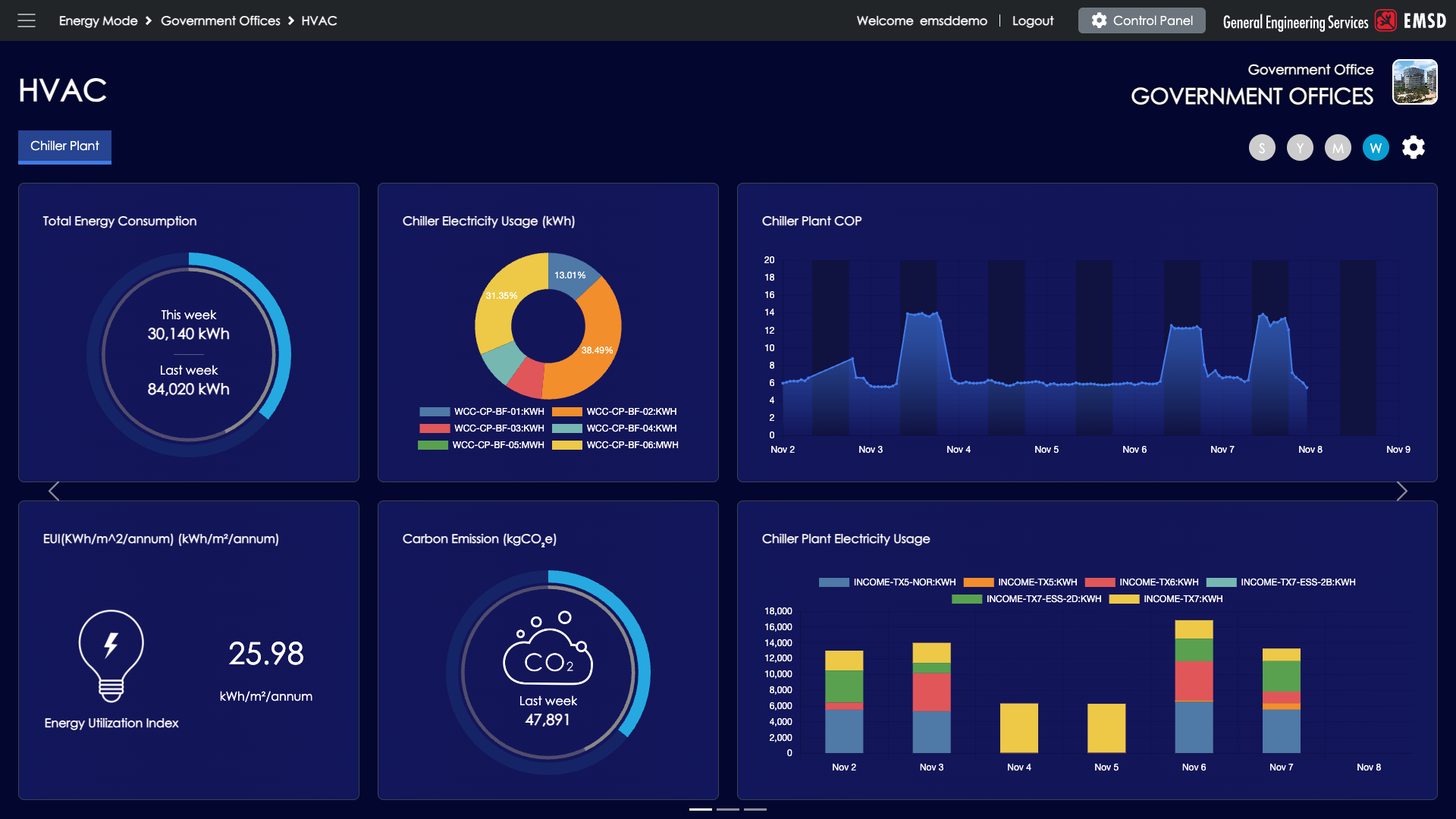
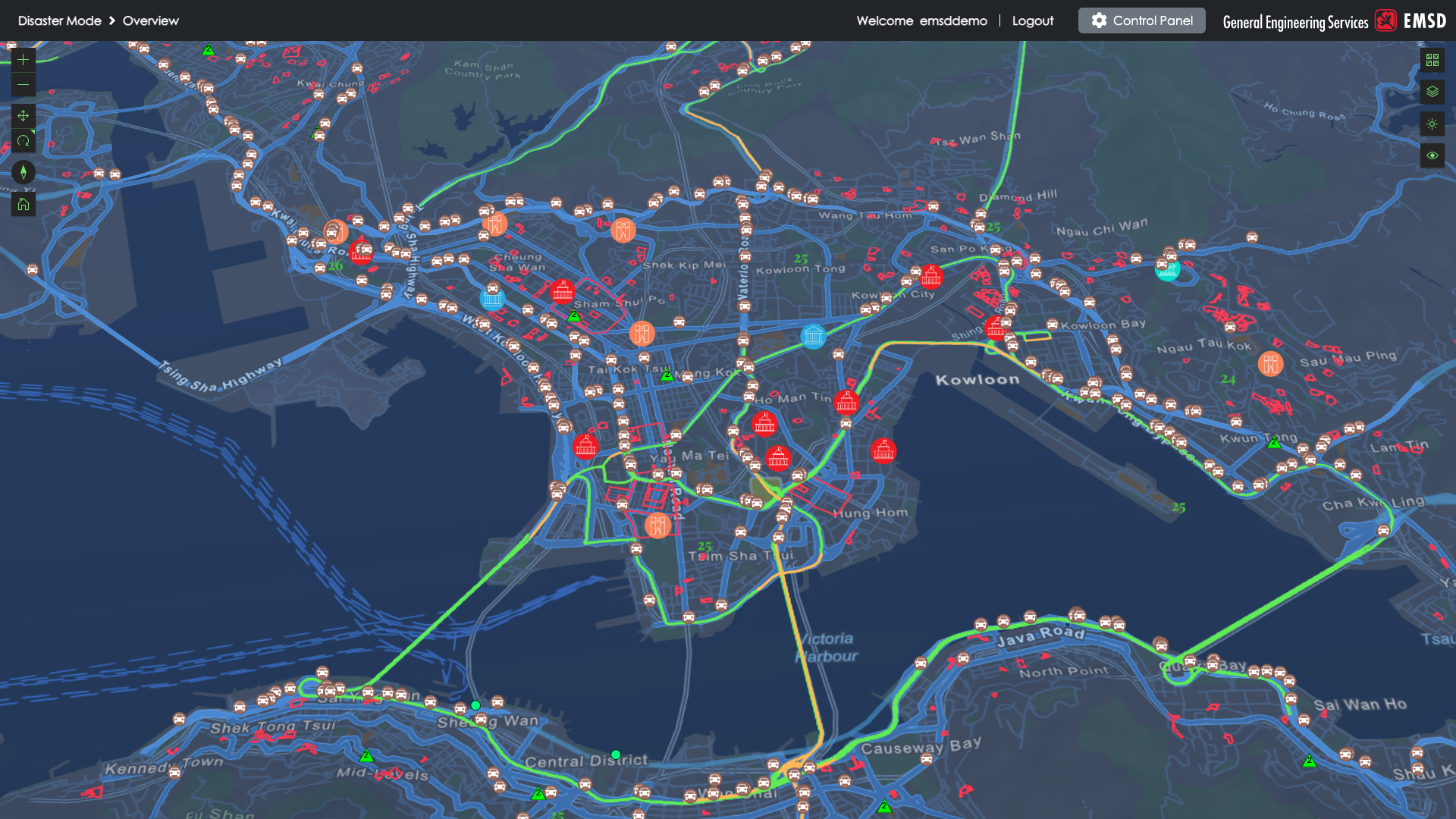
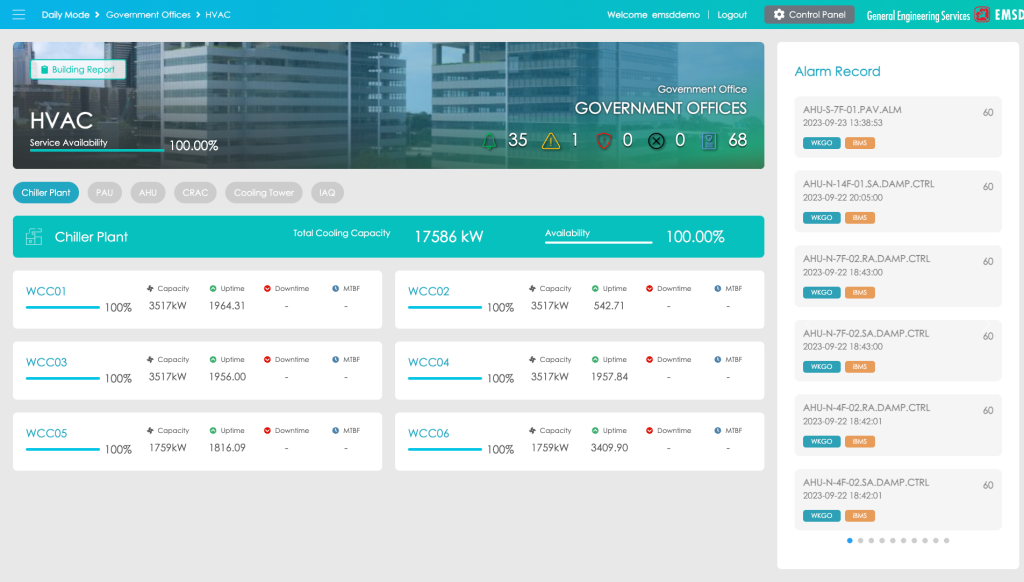
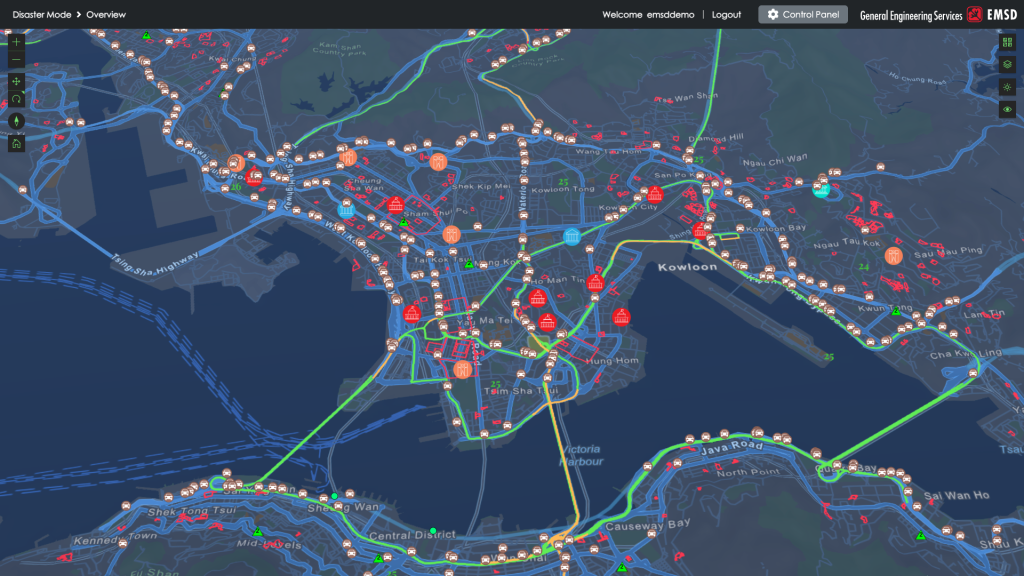
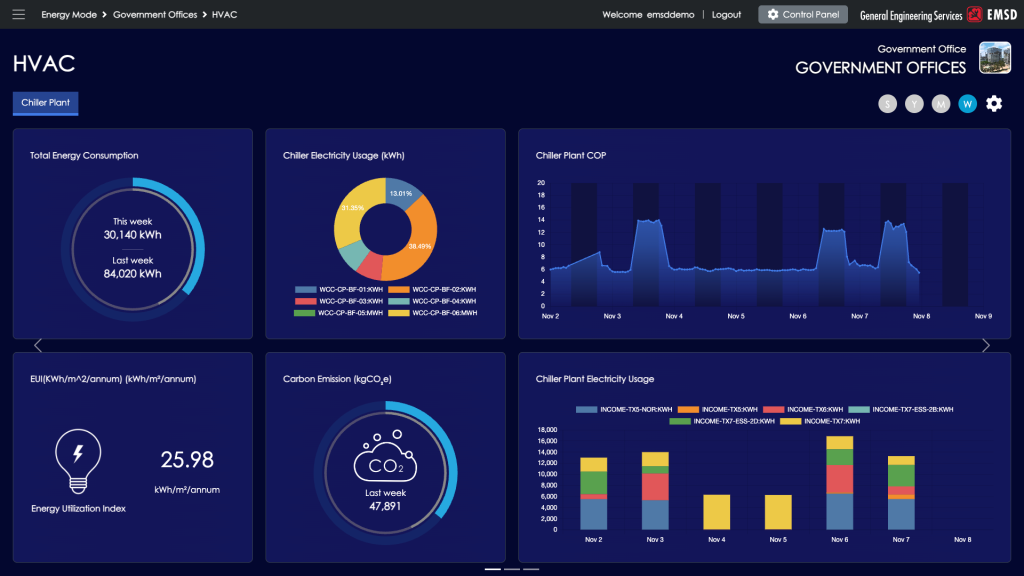
With a portfolio of more than 8,000 facilities, EMSD established its first Regional Digital Control Centre (RDCC) as a centralised data processing and modelling hub. The RDCC harnessed big data to build a dashboard with three operation modes: daily (Figure 1), energy (Figure 2) and disaster modes (Figure 3).
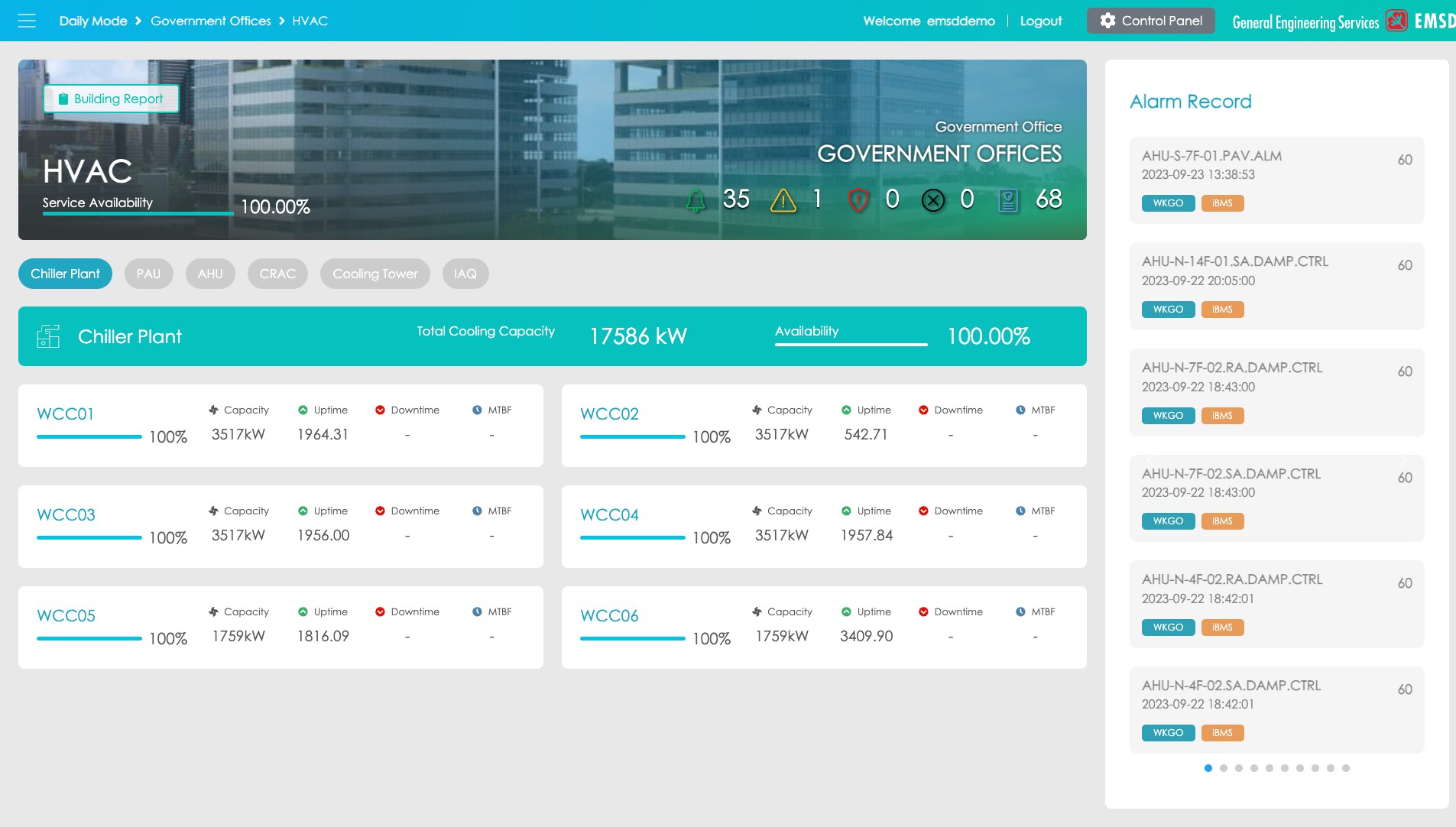
Daily mode focuses on the electrical and mechanical systems status, and the alarms of various sites and systems.
Energy mode is tasked with the energy performance of the buildings. The system is supported by analytic engine with AI and machine-learning capability (further described in the following), which is used to effectively manage and improve the energy performance of its building portfolio.
Disaster mode enables RDCC to directly monitor real-time remote plant room conditions and geographical information under adverse weather. This livestream of visual images allows for better labour coordination.
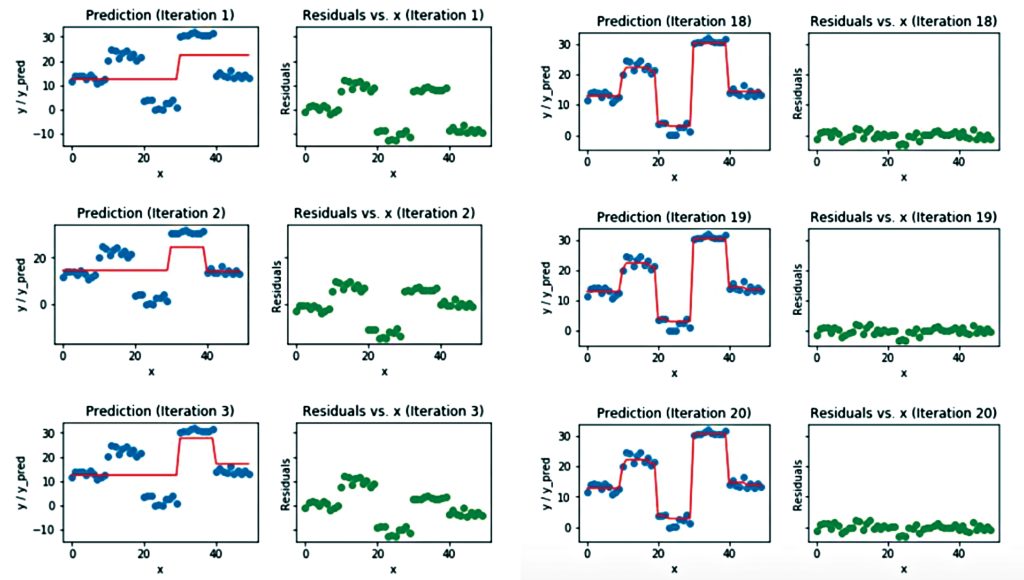
The methodology was tested on the government office complex. To optimise chiller operations and evaluate performance, over 3,200 data points from 20 engineering features were collected every 15 minutes, totalling over 300,000 data points daily. The raw data underwent a series of pre-processing steps including data checking, removing duplicates, filtering outliers and imputing missing values. Over 20 engineering and extract, transform, load (ETL) rules were co-developed by engineers and data scientists. Based on the processed data, AI models for cooling load prediction and chiller coefficient of performance (COP) were developed (Figure 4) using extreme gradient boosting (XGBoost) and Multivariate Polynomial Regression respectively (Chen, 2020). Thirteen features such as temperature, humidity and other factors were used to predict cooling load demands separately for the north and south office towers. A total of 15 explanatory variables were identified for the chiller COP model.
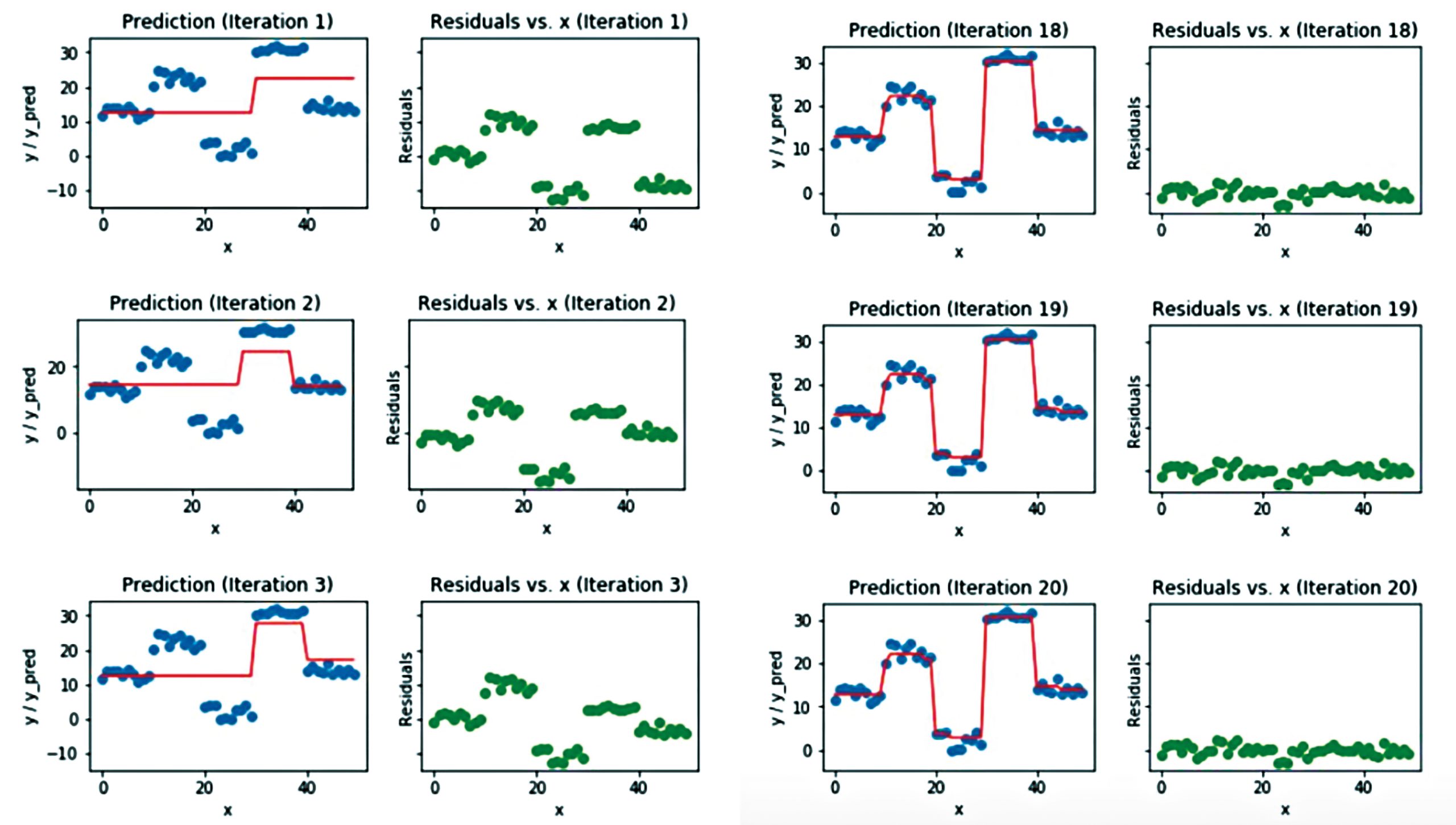
The cooling load prediction models achieved a root mean squared error (RMSE) of 125.75 kW for the north tower and 160.48 kW for the south tower. The chiller COP model identified part load ratio as the most important feature, followed by wet bulb temperature. The optimised chiller sequences identified by the AI models were implemented and tested onsite from 20th to 25th June 2021. The AI models suggested operation sequences different from the original controls predicting higher average COPs and an improvement of over 10%.
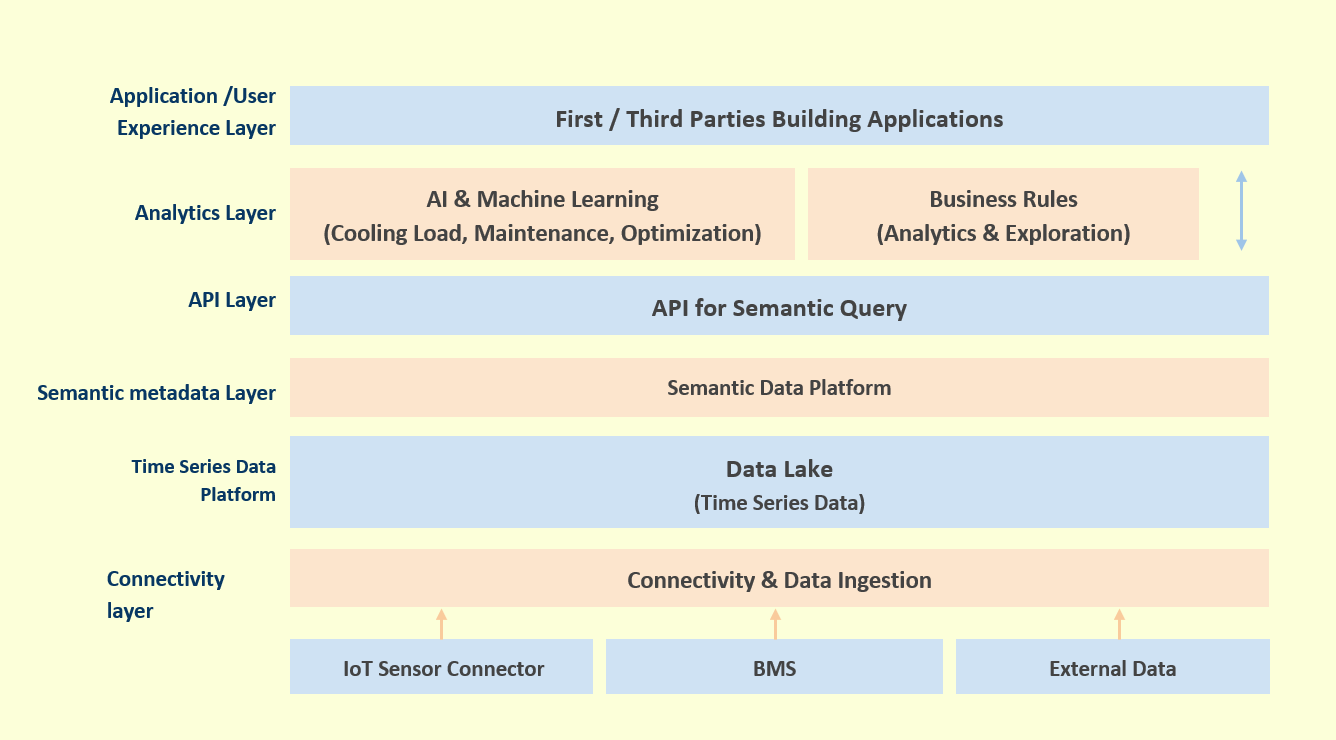
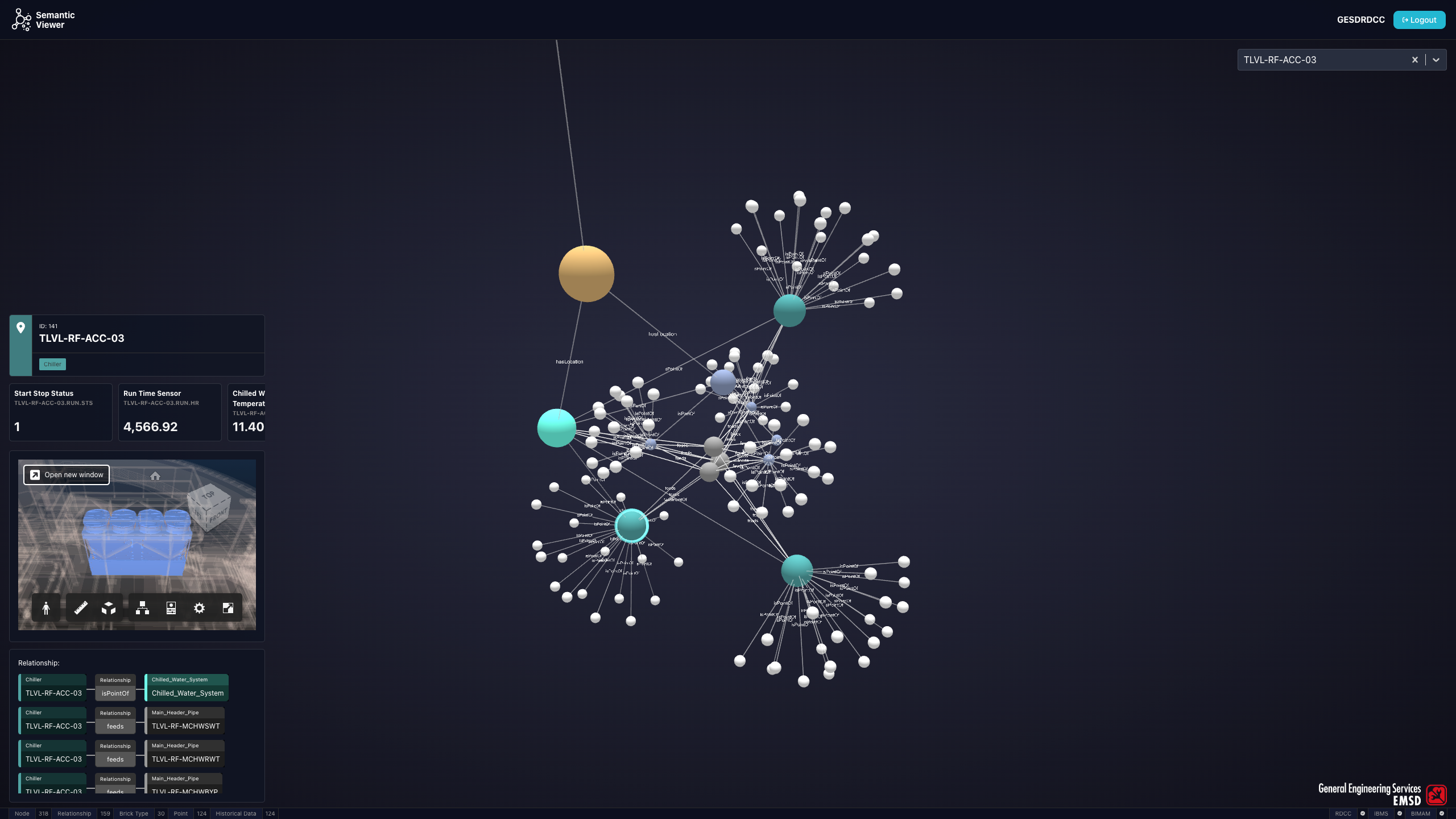
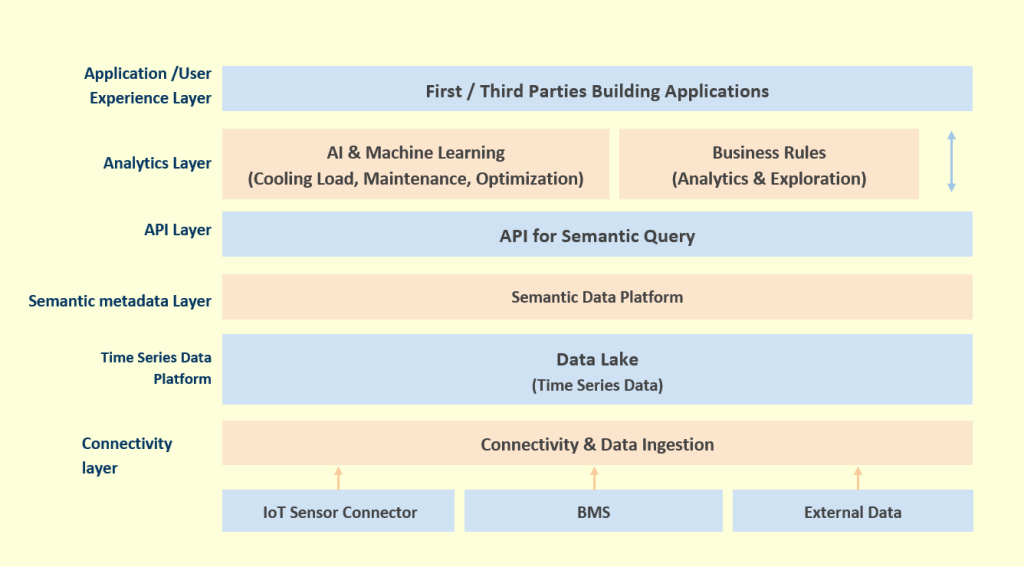
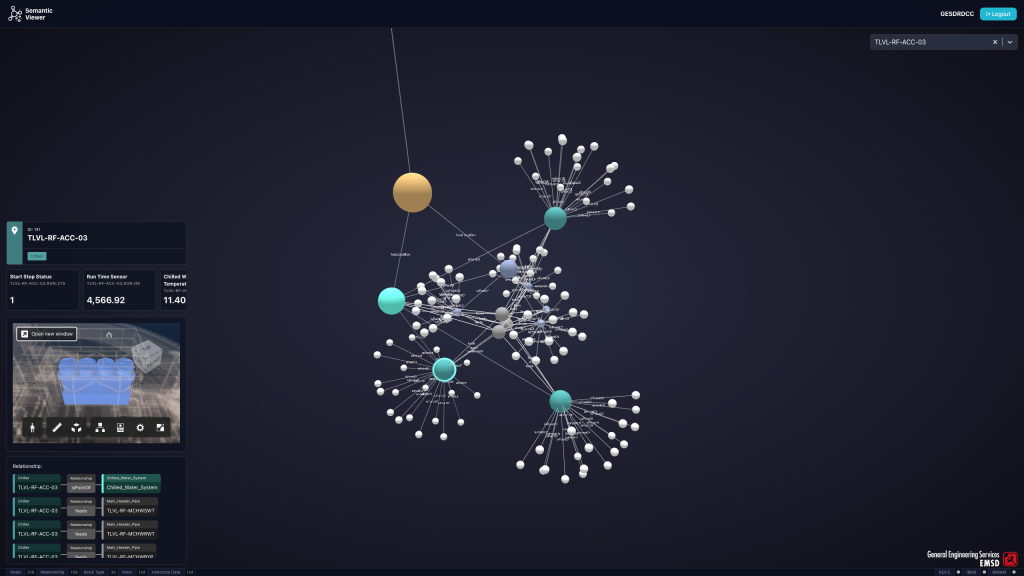
A semantic approach was deployed based on the Brick schema (Figure 5), along with a time series database for ingesting building data. The semantic model digitally represents HVAC systems and their interrelationship (Figure 6) using ontologies and triples (i.e. subject, predicate, object). The standardised semantic model facilitates interoperability and enables reuse of AI models across buildings.
ADDITIONAL INFORMATION
C.W. Chen, C.C. Li, C.Y. Lin. (2020). Combine clustering and machine learning for enhancing the efficiency of energy baseline of chiller system. Energies, 13(17), 4368. https://doi.org/10.3390/en13174368
For more information on the Case Study
Contact Person:
Patrick So