building
Varennes Net-Zero Energy Library (Energy Platform)

Transactive energy is an integral aspect of the global ongoing energy transition for Quebec. This involves modelling and controlling residential, institutional and commercial users loads to allow demand-side energy flexibility participation in the local energy market and evaluation of their impact on the grid system.

This project aims to deliver an energy platform to learn how dynamic energy exchanges can be tailored to the needs of participating customers and market conditions of the electricity network. This is achieved by means of an agent-based model (ABM) that enables to understand the economic and technical constraints required to harmonise energy transaction, demand-side flexibility and energy prices between neighbourhoods and the grid.

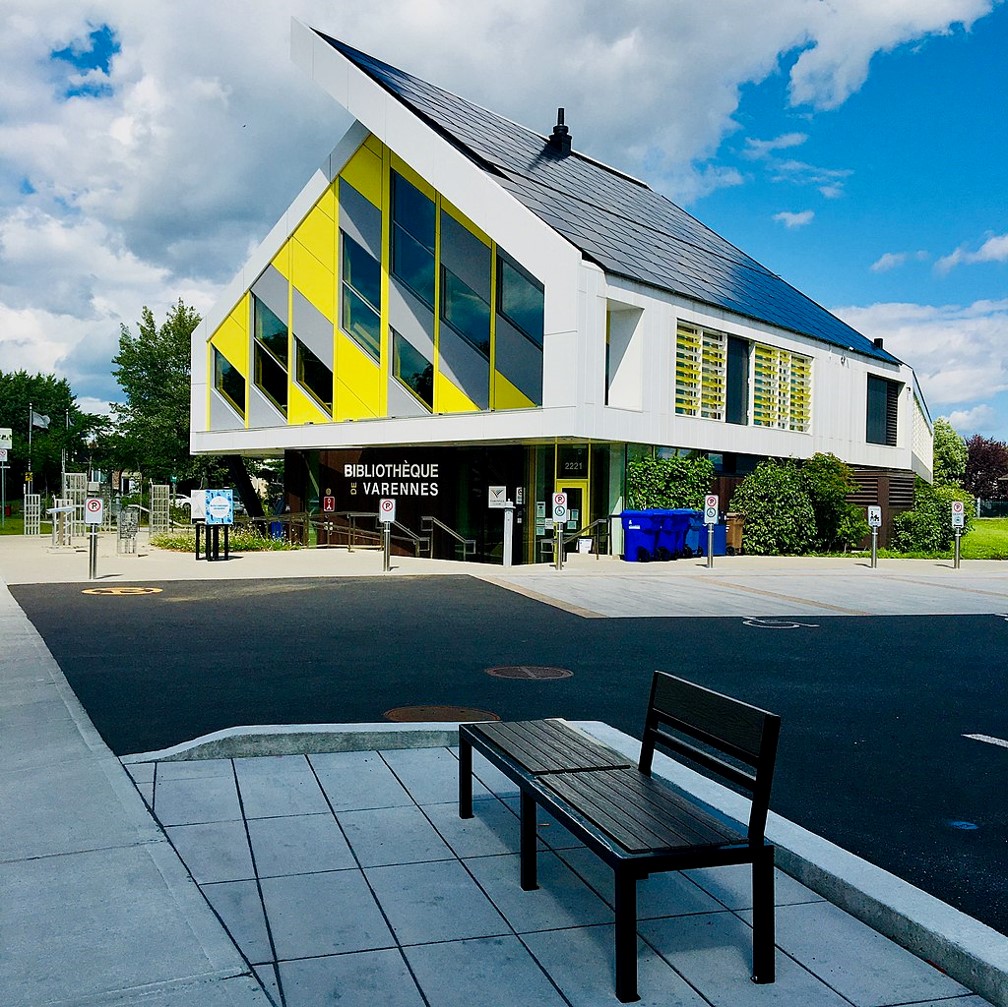
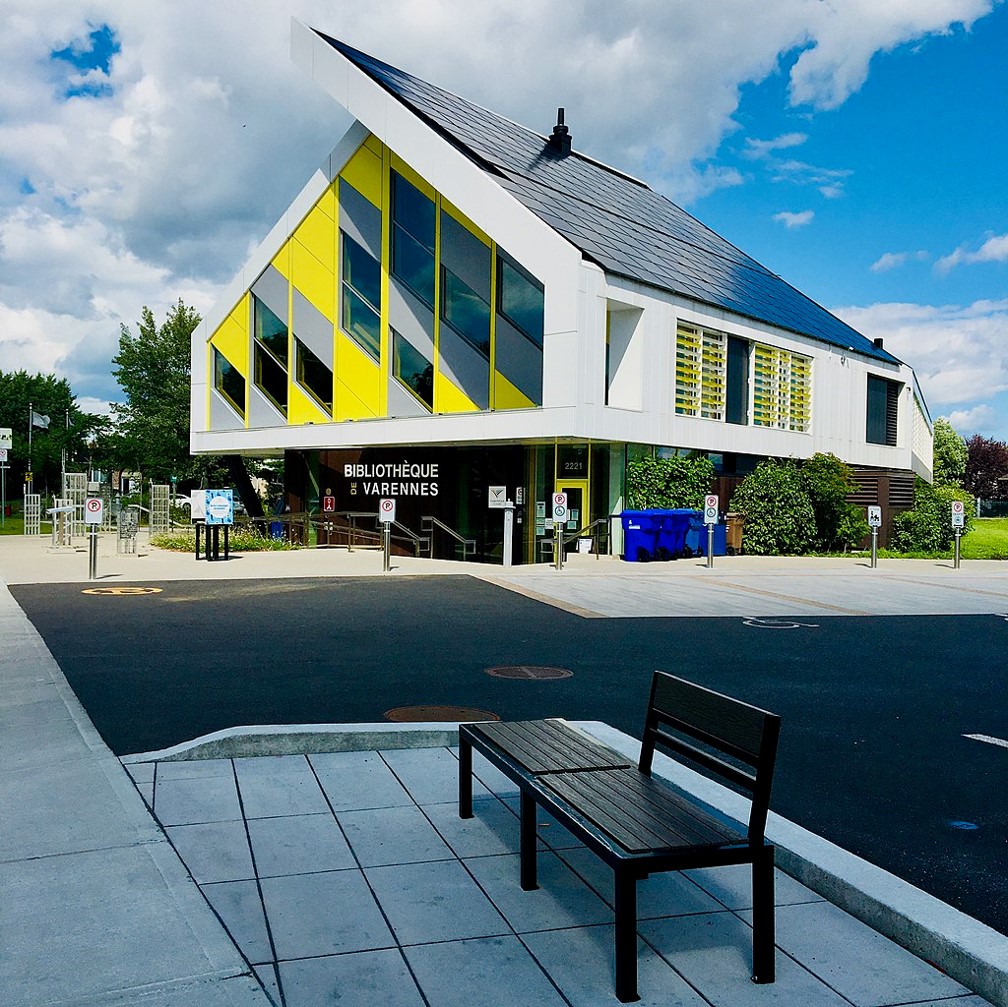
The institutional building of the Varennes library is used as a case study to increase the knowledge on the impact of occupancy behaviour and preference on the local market. The library includes unique and innovative features, such as a building-integrated photovoltaic (BIPV) system, geothermal heat pumps as the main heating/cooling source, and hydronic radiant slab for thermal storage.

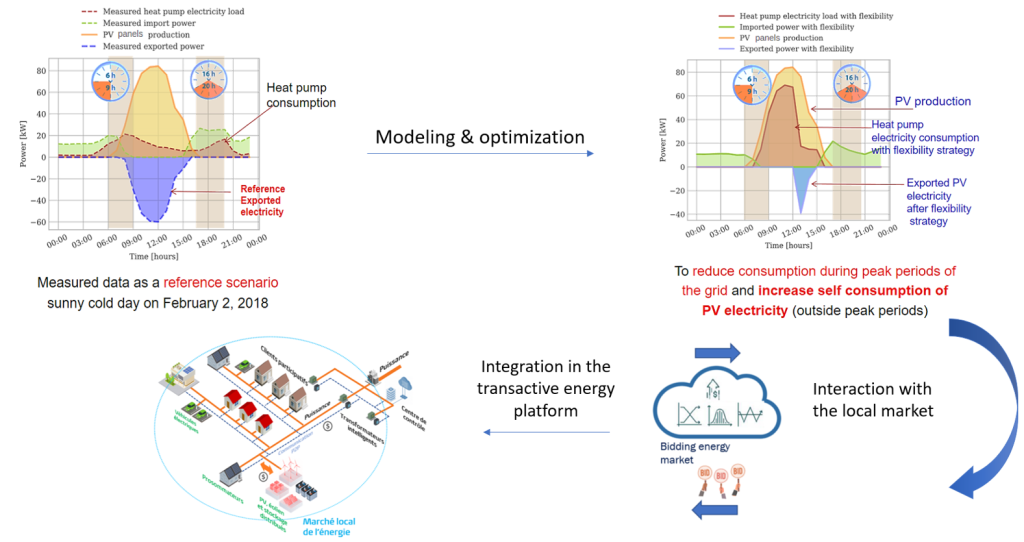
This building and its associated assets are integrated into the local energy market testbed being created. The building agents take the electrical and thermal constraints as well as some of the occupant preferences constraints into account. In this case study we use a market price, where buyers submit bids to purchase energy considering their costs and preference while sellers make tenders to sell energy by maximising their profits. A transaction will be established when their requirements are matched. The bids and transactions can be made either in exchanges or bilaterally. In addition, transaction platforms are virtualised as software applications on the cloud. Marketers are responsible for managing transactions and reducing the imbalance between energy demand and supply. With large-scale, frequent and efficient transactions, the market price will gradually stabilise and balance supply and demand.
Project Information

Location

Montréal, Canada

Building Typology

Library

Technology Installed / Proposed

Building-integrated photovoltaic (BIPV) system, geothermal heat pumps as the main heating/cooling source, and hydronic radiant slab for thermal storage.

DATA AVAILABILITY

Library heating and cooling data provided by four electric ground-source heat-pumps, radiant hydronic slab temperature, air set-point temperatures, and occupancy preferences.

Status

Operational - Awaiting Results

The general objective of this study is to develop and integrate an institutional building in a transactive energy platform for a complete representation of the urban environment and the different kinds of buildings that characterise it.

The following objectives are addressed as part of this study:

  • Analysis of the available occupancy profiles of the Varennes library with respect to temporal and environmental features (e.g., seasons, time of day, and/ or weather conditions) and ranking of their impact on the library occupancy schedules.
  • Development of a prediction model to forecast day-ahead occupancy of the library based on the features identified from the objective above.
  • Development of a decision-making framework for managing thermal demand in the library as a function of occupancy level.
  • Formulation of an agent-based model for the Varennes library as a representative example of an institutional building in the local bidding energy market (i.e. participation scenarios in transactive energy as function of occupancy).

The developed case study is part of the Hydro-Quebec transactive energy platform, aiming at creating better business models to handle the impending penetration of renewables (among other technology) in a modern grid. Hydro-Quebec provides data, support to the participants and much needed direction regarding the electricity grid in Quebec and the proposed methodologies that are wished to study within the transactive energy platform. The company also provide hardware support and part of the market and system methodology required to complete this case study.

This work provides key elements that would help create a transactive energy platform. The platform is expected to be used for analysis of different market and business models that facilitate increased participation of the end-users, improved efficiency in the grid and optimal usage and distribution of the energy present in the urban neighbourhoods.

The institutional building of the Varennes library is used as case study to understand occupancy preferences with an aim to increase knowledge on the impact of occupancy behaviour on the local market.

The benefits gained from this study allow to carry out a review of occupancy preferences and experiences with transactive energy and customer involvement; describe the deployment trajectory of transactive energy concept in Quebec; and document occupancy experiences of participation in the process of deployment of local market within the transactive energy.

Interoperability:
Lack of standardised communication protocols; standardisation should be a priority to enable transactive energy systems.

Lack of interoperability resulted in integration and coordination of smart devices taking longer than expected.


Users’ acceptance:
Need for public engagement to convince the public that transactive energy can have a role in our energy system.


Technology deployment:
Deploy transactive platform, transactive tariff, and device agents before recruiting device vendors and customers; need more flexible devices, such as batteries, electric heat pumps, EVs, and electric water heaters; the developed transactive energy platform is under test and can be a component of Hydro-Quebec’s retail electricity market with very high renewables penetration, storage, and customer response.

The transactive energy testbed being developed requires various agents that represent the different participants within a distribution grid. The project entails adding various users in the form of building agents, especially from the non-residential sector. This case study specifically focuses on developing building agents that represent institutional buildings, taking their occupancy and operational parameters into account. The study consists of four phases and leverages data from the Varennes library as a representative exemplar when developing workflows for similar buildings.

  • The first phase of this work focuses on using statistical methods to analyse the library’s occupancy patterns and identify key metrics that represent occupancy (e.g., earliest arrivals, latest departures), which are critical for operational decisions.
  • The next phase focuses on using different machine learning methods, such as autoregressive integrated moving average (ARIMA) and other methods to forecast the day-ahead occupancy of the library as a function of most significant features.
  • The third phase involves developing a decision-making framework for operational decisions which uses predicted occupancy level as an input together with day-ahead weather forecasts. This framework leverages previous work on thermal demand modelling of this library building to estimate the impact of operational decisions (e.g., setpoint changes) on the indoor environment and occupant comfort.
  • Finally, the occupancy forecasting model as well as the decision-making framework are formulated into an ABM following the overview, design concepts, details (ODD) protocol to enable participation in the bidding energy market for transactive energy. The developed framework takes advantage of real-world data exploration measured by smart-meter technology. This data encompasses the information about outdoor temperature, global horizontal solar radiation, heat pump load, plug-loads electricity demand load, average air temperature and average concrete slab temperature, at 15-minute intervals. Slab and air temperatures vary widely because they include zones with different temperature set-points. These measured data were recorded over three years, but only the peak period in winter from January to February 2018 is considered in this study.

For more information on the Case Study

Contact Person: 

Dr Fatima Amara

cc by nc nd
Copyright Statement
Fraunhofer IEE agree that the case study information of ZUB Building can be shared under CC BY-NC-ND 4.0 license. This license allows others to download your works and share them with others as long as they credit you, but they can’t change them in any way or use them commercially.

Contact Researcher