
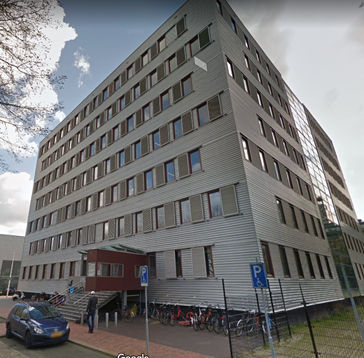
building28 tudelft
TU Delft “Building 28”

The Technische Universiteit Delft (TU Delft) Building 28 is one of the living labs within the Brains 4 Building project (duration: 2021-2025), funded by the Dutch Ministry of Economic Affairs & Climate. The living labs will be used for small-scale testing and prototyping algorithms and methods to reduce energy consumption, increase comfort, respond flexibly to user behaviour and local energy supply and demand, and save on installation maintenance costs. After successful small-scale testing, other buildings will serve as use cases and validation cases for demonstrating replication and upscaling.

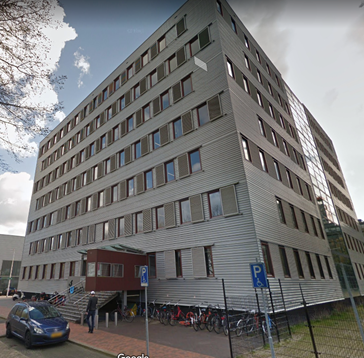
TU Delft Building 28 is a medium size (10,787 m2) office (88% of floor area), education (8% of floor area) and low-tech lab (4% of floor area) at the TU Delft campus. The building was built in 2002 and fully renovated in 2018 to an energy label A. The energy systems include two high-efficiency natural gas-fired boilers.

Project Information

Location

Mourikbroekmanweg 6, Delft, Netherlands

Building Typology

Education Building (including office, education and low-tech lab)

Technology Installed / Proposed

Testing of an algorithm for automated fault detection and diagnostics (FDD) on the HVAC systems applying the 4S3F method. Applying the 4S3F method for occupant comfort.

DATA AVAILABILITY

Historical data from the Building Management System (Johnson control); Smart energy meter data; Real time energy data through data platforms on The Green Village; Digitised principal schemes of the building; WiFi data (to track occupancy).

Status

Operational - Completed design/development, construction, and testing/commissioning

  • Current state-of-the-art: There is a need for plug-and-play solutions to reduce the current 20-30 % of energy wasted in utility buildings by optimally using data availability for fault detection, diagnosis, and condition-dependent maintenance.
  • Project objectives and intended impacts: Minimise energy consumption and prevent energy wastage by developing modular and scalable methods and tools for fault detection, diagnosis, and condition-dependent maintenance utilising data from the Building Management Systems (BMS), energy metres and sensors.
  • Intended results (products & services): Proof-of-concept of modular and scalable methods, algorithms and software plug-ins for continuous performance monitoring for fault detection, diagnosis, and condition-dependent maintenance for performance-based facility management.
  • Key technology: Testing an algorithm for automated fault detection and diagnostics (FDD) on the HVAC systems applying the 4S3F method.

Smart software plug-ins allow installation and maintenance companies to realise direct energy and cost savings on running maintenance contracts by monitoring performance and the possibility of offering more attractive long-term contracts that include new services such as diagnostic systems and quality improvement guarantees. The same applies to Energy Service Companies (ESCOs) that develop, design, build and arrange financing for projects that save energy, reduce energy costs, and decrease operations and maintenance costs at their customers’ facilities. Applying smart control is an active value proposition for ESCOs as it results in direct savings on ongoing long-term ESCO contracts in which agreements are made on energy and comfort performance to be delivered.

No results are available yet.

Anticipated impacts include lower CO2 emissions, lower energy costs and increased comfort.

Not available yet.

TU Delft Building 28 is a medium size (10,787 m2) office (88% of floor area), education (8% of floor area) and low-tech lab (4% of floor area) at the TU Delft campus. The building was built in 2002. In 2018 TU Delft took over the building from the Netherlands Organisation for Applied Scientific Research (TNO), after which it was fully renovated to make it fit for education purposes. The renovation included adaptations to the installations in the building but no large changes to the building envelope. The building has an energy label A.

Heating is provided by two natural gas boilers located on the 7th floor of the building. The main distribution station is in the technical room on the roof of the building. The heat is delivered to the air handling units, radiators, floor heating, convectors, and air curtains. For comfort cooling, cold is provided by a chiller on the roof of the building. Approximately 6 (multi-)split systems have been installed on the roof and in the basement. Local heating is provided with radiators and preheating of the air and (top) cooling through the air handling unit.

No data-driven approach is currently applied. Within the framework of the project, FDD methods will be tested first on the Air Handling Unit and next on the full HVAC system.

Data required for the FDD testing: historical BMS, smart energy meter data, sensor data, and process and instrumentation diagrams (P&IDs).

For more information on the Case Study

Contact Person: 

Mirjam Harmelink

cc by nc nd
Copyright Statement
Fraunhofer IEE agree that the case study information of ZUB Building can be shared under CC BY-NC-ND 4.0 license. This license allows others to download your works and share them with others as long as they credit you, but they can’t change them in any way or use them commercially.

Contact Researcher