zub 1 1024x683
ZUB Building

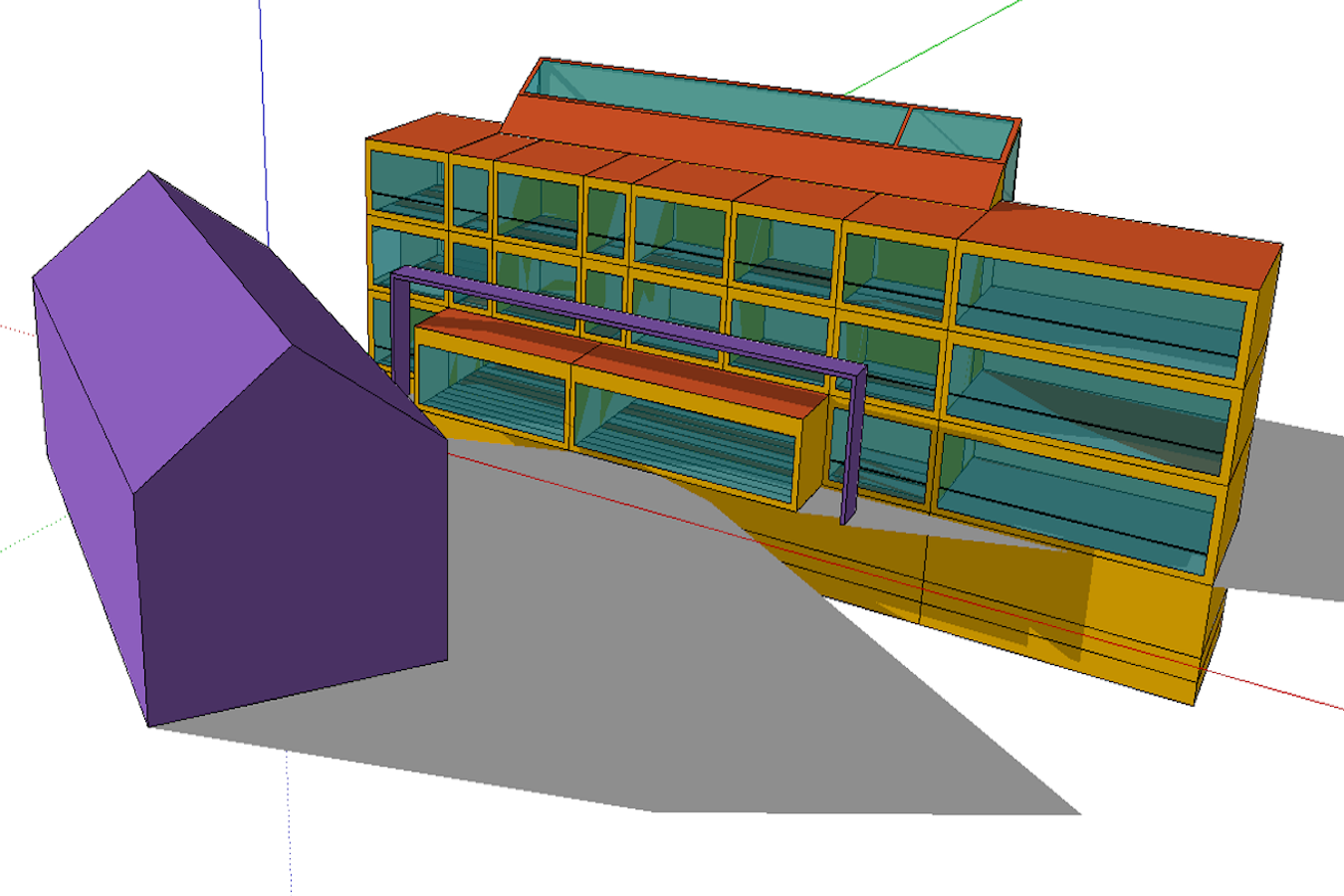
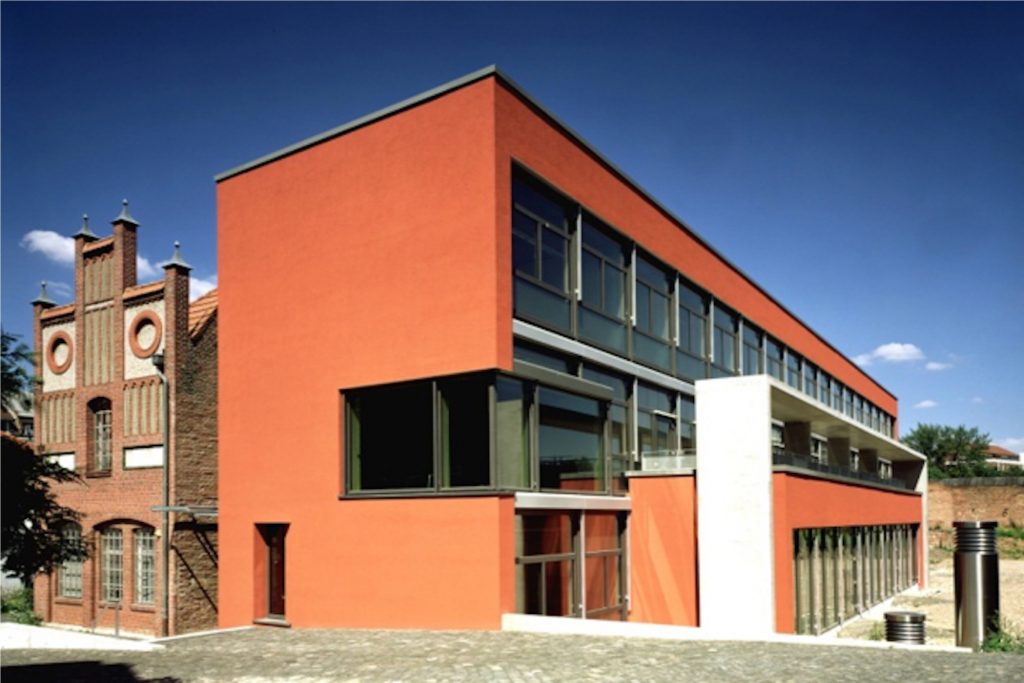
The ZUB office building (Centre for Environmentally Conscious Building) was designed in 2001 with the purpose of testing low-energy and carbon technologies. With the building having primarily heating demands, the design annual heating demand was estimated to be less than 20 kWh/m2. Energy demand in operation was 16.5 kWh/m2, achieving the best possible rating according to the German Energy code “Wärmeschutzverordnung 95”.

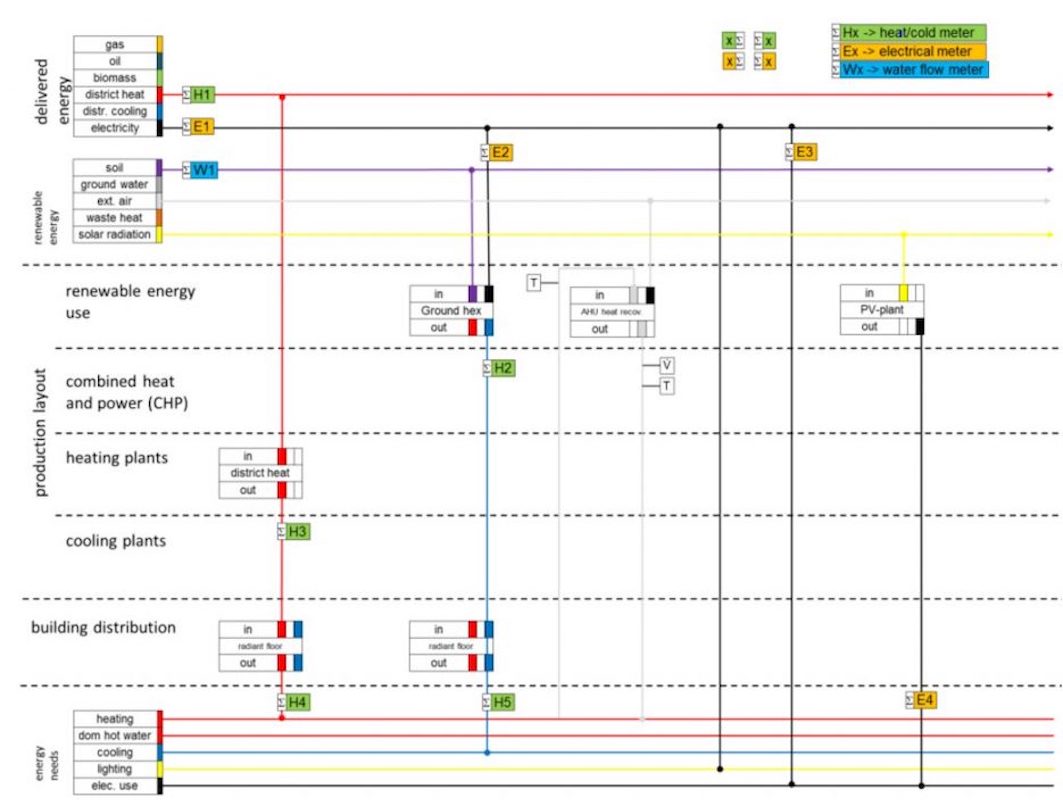
The energy concept of the building included construction with very low U-value, triple glazed windows and design to use natural lighting and natural ventilation. Solar gains meet most heating demands through the south-facing façade. When additional heating is required, this is delivered through a communal district heating network. Cooling demands are met by a ground-source heat pump placed under the ZUB basement. As the building is air-tight, an 80% mechanical ventilation with heat recovery system is used.

The characteristic that defines the building is the high inertial behaviour due to the weight of the building walls and the massive radiant systems installed to deliver heating and cooling. These types of high thermal mass slabs allow water supply temperatures close to the internal ambient temperatures, i.e. use of low water temperatures during the heating season and relatively high water temperatures during the cooling period. Combining these strategies leads to reduced energy consumption by maximising the exergetic use of the climate control systems.
Project Information

Location

Gottschalkstr 28A, Kassel, Germany

Building Typology

Office Building

Technology Installed / Proposed

Implementation of a model-based control strategy to ensure proper use of the thermal mass to meet heating and cooling demands and ensure occupant comfort. Comparison of baseline rule-based control to model-based control. Implementation and testing of continuous monitoring and data analytics platform.

DATA AVAILABILITY

The building has more than 800 data points available with 1-min interval records kept since 2001. In some years, there have been gaps in data storage.

Status

Operational - Results Available

Good indoor comfort for the occupants was an important requirement from the building owner. After ten years of use, the building energy demand was low. Due to the occupant loads and solar radiation, the building was overheating in both winter and summer operations. This led to significant occupants’ discomfort and complaints.

Occupants could manually control the blinds to balance solar gains. The high thermal inertia of the building reduced controllability and created challenges to the building control. A model-based predictive control approach was adopted to check if using models to predict behaviour could lead to improved operation and thermal comfort.

Based on the lessons learned, there could be three different business models:

  1. Building designed from scratch, where most of the variables could be foreseen and the investment cost related to the installed components are to be decreased with control strategies that do not drive the building altogether but drive some zones separately, accumulating energy in unoccupied time periods. The power needed in this case is lower than the power installed when the building is driven as a single entity.
  2. Existing buildings want to be intelligent, where business could be based on energy savings obtained.
  3. Low energy buildings want to be intelligent, where the improvement of comfort has to be monetarised to make interesting the development of a business.

The challenge of the project was to decrease the number of hours where the building was uncomfortable, saving energy in a building that was designed as an example of low energy building. The simplicity of the building concept did not allow to play with more cards than adjusting building and system time constants with exact-enough weather forecast to harvest the potential solar radiation on the south façade without decreasing comfort levels.

The results obtained in this project were as follows:

  1. Understanding the building delays and how to connect them to next day weather.
  2. Integrating co-simulation in a broad type of buildings could increase comfort and energy savings. It is only needed to follow some steps from the beginning of the design to avoid duplication of work and foresee the placement of sensors in the real and virtual building.
  3. Studies on the results obtained showed some data that we could not know a priori when the building was working in default mode and how the system reacted to the unexpected values.
  4. The results showed that the building could have less installed power than the one hosted. Different control strategies lead to savings in the fixed investing costs.
  5. After some operation period the building lost cooling power (phreatic level decreased and the geothermal heat exchanger delivered much less energy than expected). Therefore, the blinds operated more frequently, which made the system search for other control strategies sacrificing visual comfort.

Operational strategies:
The algorithm found logical control strategies that could be programmed without simulation software. In this case, the heating system for a low-reacting, high-efficient office building could be switched OFF earlier on Friday morning, because whatever will be done, the occupants would not notice the changes in heating system operation contributed by the high thermal mass of the building.

Radiant floors should not be driven with water temperatures higher than approximately 37 ºC because of discomfort and health risks. However, sending temperatures above the mentioned 37 ºC to cool empty rooms when offices are unoccupied allows loading the structures quicker and achieving a greater energy exchange. This operational mode helps to heat up the building more quickly and efficiently before Monday morning.

Digital twinning is not only used for controlling but also for identification of model deviations, building failures and system fouling in case of enough data availability.


Data management:
Installing the logic in a building where all sensor information is not available or “open-source” makes the return of investment of the technology impossible due to the extensive engineering hours needed to link the data.


Users’ acceptance:
Setpoint variation of building parameters is mostly well accepted when the user does not notice the action, but when motors make noise or something moves without being expected, it makes the user uncomfortable.

Systems that vary without providing a physical option for the occupant to vary actions are not accepted in first instance. However, building user intuition does not help when the building is acting automatically. In case of existing a hardware option to vary the action, the control will be overridden in most cases.

Baseline control

A rule-based logic is used based on heating curves to determine the supply water temperature. The controller is operated on the assumption that the external conditions in the next day would be similar to the current day. For this reason, a running average of the last 13 hours (approximated time constant of the building) was taken and used through the heating curve to determine the water supply temperature. Then each zone had an independently controlled thermostat, which decided if the thermally activated building structures (TABS) system should be activated in a zone. The control system did not take into account diurnal swings in solar radiation, or the loading of the thermal mass. The heating strategy was sensible for operation from November to February – but not when there were big changes in ambient conditions between two consecutive days. During the other four heating months, the building was always overheating.

In cooling mode, the low power delivered by the geothermal slab was insufficient to meet the required cooling demand. It was deemed that controlling the solar gains effectively was the best strategy to reduce demand. This could be achieved by operating the blinds for the south-facing windows automatically to reduce solar gains and cool the building at night-time when outside temperatures were lower.


Model-based control

The testing of model-based control was implemented in two European research projects, which investigated approaches to automatically operate controllable systems to improve comfort, minimise energy demand and natural light.

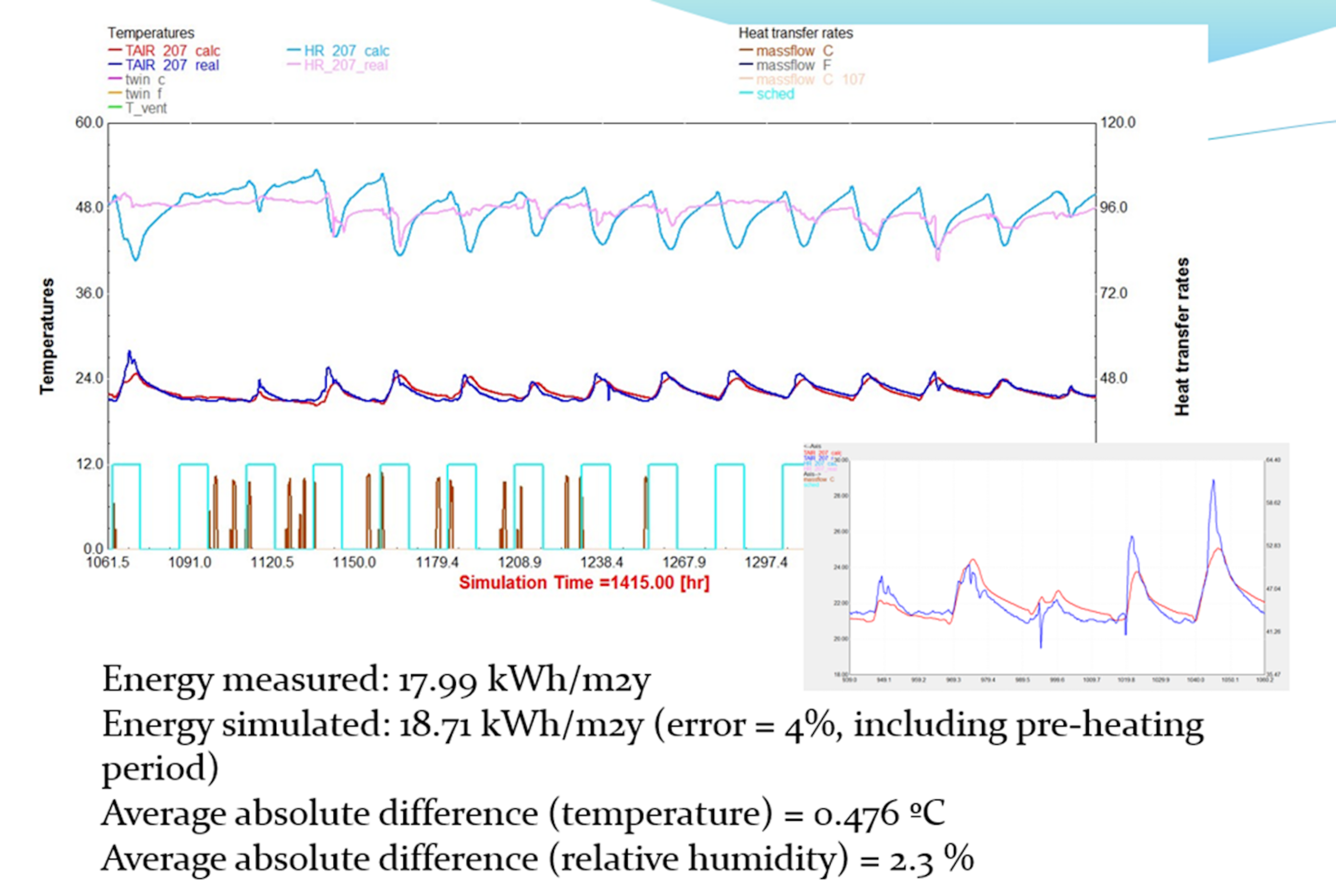
The first project executed offline building simulations with a digital twin to evaluate potential savings strategies. Results obtained were compared online to the expected results based on measurements taken by the many sensors installed. In the second project, everything was brought online, from the building information modelling (BIM) design and system definition to the programmable logic controller (PLC) building signal communication. The used models were made for fault/identification and evaluation purposes.

Control algorithms were based on a cost function that maximises room comfort conditions and minimises energy consumption with some constraints related to the maximum number of hours that uncomfortable ambient conditions are allowed in a day and the maximum number of blind movements allowed per hour. Weighting factors balancing comfort and energy savings were defined. Co-simulations were made minutely, and control positions were communicated to the building every 3 hours.

For more information on the Case Study

Contact Person: 

Dr Juan Rodríguez Santiago

cc by nc nd
Copyright Statement
Fraunhofer IEE agree that the case study information of ZUB Building can be shared under CC BY-NC-ND 4.0 license. This license allows others to download your works and share them with others as long as they credit you, but they can’t change them in any way or use them commercially.

Contact Researcher